Learning platform
 en
en 


One kick-off routine that is designed to exploit this susceptibility by implementing a direct attacking approach emerged during the 2021-22 season. Its inventive structure aims to entice and distract the opposition, creating the time and space for a player to make a run in behind the opponents’ defensive line.
VIDEO EXAMPLES
Routine breakdown
Botafogo's kick-off routine is broken down into four key parts, outlining the set-up, individual player roles, tactical impact on the opposition, and the technical execution required for it to be effective.

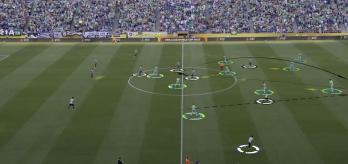
Four players positioned in and around the centre circle execute a four-pass combination.
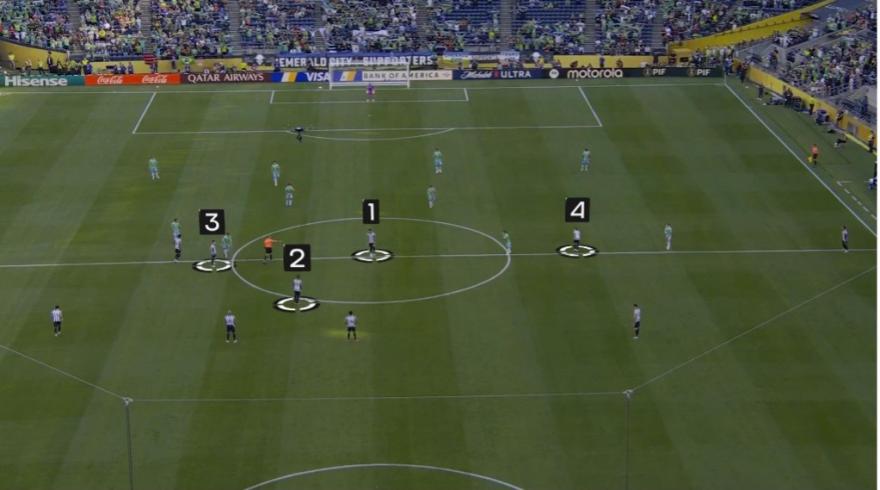
All four players directly involved must be capable of performing different actions:
-
Player 1 (taker) must be able to play a precise one-touch lay-off after a feinting movement to attract pressure.
-
Player 2 must be comfortable with inviting pressure by taking a touch before playing a return pass to player 1.
-
Player 3 must be positioned to receive the ball on their strong foot and be capable of delivering an accurate and weighted pass in behind.
-
Player 4 must be sufficiently agile to attack the space in behind and have the composure and technique to finish in the one-on-one against the goalkeeper.
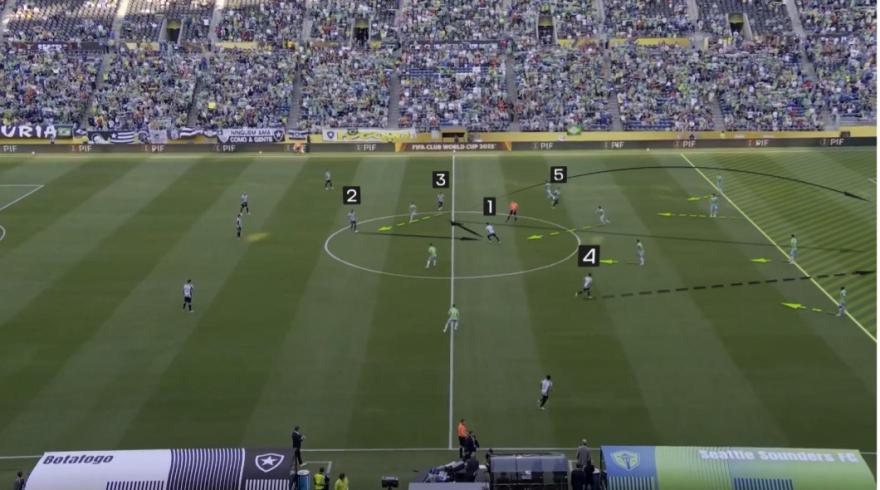
A key aspect of the routine is to entice the opposition into pressing the short passes and then exploit their flow of movement in the opposite direction. The initial pass to player 2 is intended to draw the opposing forward away from player 3, which starts to disrupt the first defensive line. After taking a controlled touch, player 2 returns the pass to the kick-off taker, inducing further pressure, while player 1’s movement to receive the ball with their back to goal attracts both central midfielders. Consequently, the defensive line step forward in support, leaving space in behind and losing track of player 4’s forward run. Meanwhile, player 5’s movement serves as a decoy, drawing the right centre-back out of position.
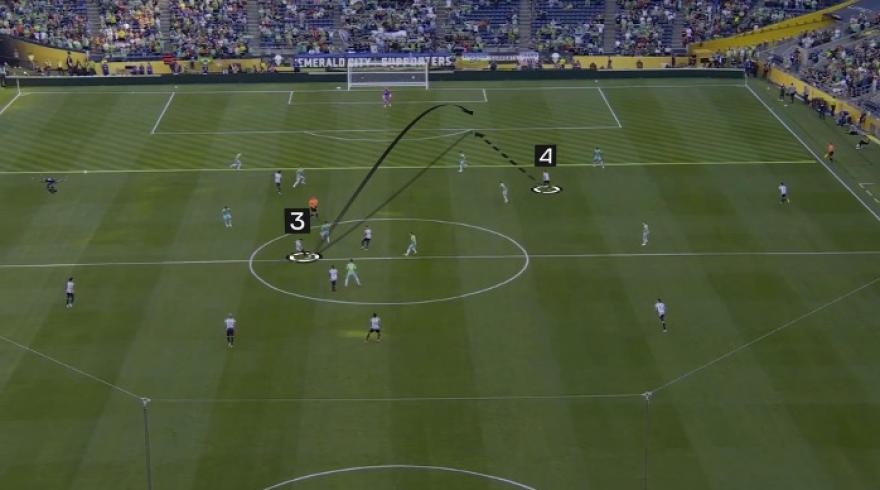
After the opposition have been enticed through the short passing exchange between players 1 and 2 and space has been created for player 3 to receive the ball facing forwards, the decisive technical phase of the routine follows. Player 3’s pass in behind and player 4’s run must be perfectly in sync. If the pass is overhit or the run is late, the goalkeeper may intercept; if the pass is underhit or the run is made too early, recovering defenders could have time to intervene.
Defensive tactics
As innovative routines become more common, opposition teams naturally become increasingly alert and better prepared to defend against them. In these situations, players must adapt to the defensive set-up and exploit alternative opportunities. The videos below present three examples in which the defending team disrupt the passing combination, prompting varied responses from the attacking team. These strategies involve either playing it safe in order to retain possession or maintaining the positive approach by finding alternative ways to mount a direct attack.
KEY TAKEAWAYS
Given the growing emphasis on set-piece situations, kick-off routines such as this sequence of short interplay followed by a long ball offer teams opportunities to create goalscoring chances. The three clear principles outlined below are crucial in order to unsettle the opposition and lay the groundwork for the move to succeed.
-
Entice: By using short passes and exploiting pressing triggers, such as players receiving their ball with their back to goal, attacking teams can invite pressure and manipulate defensive lines.
-
Distract: Off-the-ball movement, feints and decoy runs can divert defenders’ attention and help attackers to gain a positional advantage by distracting the opposition.
-
Surprise: By synchronising their movements, attacking players can time the final pass perfectly with the attacker’s run, catching the defending team off guard. Teams can also vary their setup and player positioning to stay unpredictable and conceal their intentions, for example by switching the side of attack or altering players’ roles and positions from game to game.
Rate your experience