Learning platform
 en
en 


From operating in a disciplined low block in their tournament opener against Spain (0-0), their confidence grew with each match, leading to higher pressing and stronger counter-pressing against Uruguay and Saudi Arabia, and brave, high-quality attacking play against Argentina.
O’Neill breaks down their compact defensive structure, the leadership of the goalkeeper, their aggression without the ball, and the belief they showed when attacking the world champions.

Out of possession
Key points: Defending
-
Resilient low-block defending in a compact structure.
-
Leadership role of their goalkeeper, Vozinha.
-
Confidence to press higher when opportunities arose.
Low block v. Spain
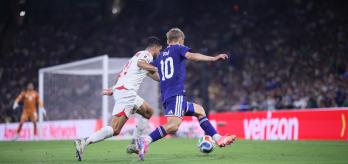
In their opening match against Spain, Cabo Verde recorded just 25.4% possession and spent a total of 27.3 minutes in a low block, the highest time spent by any team in a low block in a single game (up to the end of the Round of 32), in comparison to the tournament average of 7.4 minutes.

For O’Neill, this approach was understandable in the opening match of their first-ever FIFA World Cup appearance against a high-ranked, possession-based team like Spain.
“Operating in a 1-4-5-1 formation, we see the gaps are close between the players, but they still get pressure on the ball. Cabo Verde’s striker is reconnected with Spain’s deepest midfield player, and what they do well is slow Spain down. Spain are looking for pockets of space between the lines but are unable to find them. They are constantly moving, with real discipline and a lot of communication between players. They are not just attracted to the ball; they are taking their positions off the movements of their team-mates.”
Leadership of the goalkeeper, Vozinha
Goalkeeper Vozinha was a key factor in Cabo Verde’s defensive success in the tournament. The 40-year-old shot-stopper faced 49 attempts at goal in their four matches, keeping clean sheets in two games and conceding five goals. When they had the ball, his distribution was vital for initiating their attacking play with short, medium and long-range passes. He attempted 106 line breaks — more than any other Cabo Verde player.
“I think a big part of their defensive structure came from the leadership of their goalkeeper,” explains O’Neill. “He showed real experience but also that he was enjoying the moment, and I think that confidence filtered through the back four and into the team as a whole.”
Defending in higher parts of the pitch
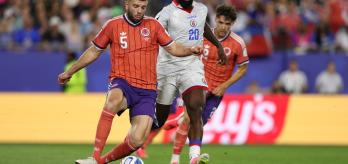
While using a low block remained a prominent feature of their out-of-possession strategy, in their group matches against Uruguay (15 minutes and 24 seconds) and Saudi Arabia (4 minutes and 24 seconds), Cabo Verde spent much less time in a low block, showing an increasing appetite to defend in higher parts of the pitch. This trend was also evident in their Round of 32 match against defending champions Argentina, where they only spent 22 minutes and 54 seconds in a low block — including extra time — compared to the 27 minutes and 21 seconds versus Spain.
For O’Neill, this trend in their performances demonstrated a growth in their confidence to be more proactive in counter-pressing and/or pressing higher. As can be seen in clip 2 below, Cabo Verde scored a crucial goal against Uruguay when defending in higher parts of the pitch.
“Cabo Verde are set up in their own half to defend Uruguay’s throw-in. Uruguay throw the ball back, which triggers the press from Cabo Verde’s striker and, immediately, substitute Hélio Varela pushes on, anticipating the next pass while the rest of the team also follows in and steps up. This forces the error and, ultimately, Cabo Verde turn over possession, and it’s a great finish from Varela. The interesting thing is how much higher their defensive line is and, as soon as the ball is thrown back, the whole team responds by advancing.”
In possession: Building play with quality
Cabo Verde’s confidence and time on the ball when in possession also mirrored their out-of-possession trajectory as they progressed in the tournament. With just 25.4% possession in their 0-0 draw against Spain, it increased to 33.4% in their 2-2 draw with Uruguay, peaking at 48% versus Saudi Arabia (0-0). Strikingly, their possession against Argentina was 34.1%, further demonstrating their confidence to be on the ball and build play.
Key points attacking
-
Ability to play through the opposition’s press with minimal touches and progress the ball to the final third.
-
Confidence to commit numbers to attack.
-
High rest-defence line when attacking in the final third to sustain attacks and initiate counter-pressure if possession was lost.
Attacking in the final third
A standout feature of Cabo Verde’s attacking play was not just their ability to build play through the thirds, breaking lines of the opposition defence with short, fast passes using minimal touches. As the tournament progressed, they also spent more time attacking in the final third, demonstrating their growth in confidence and belief with the ball.
The data below, from FIFA’s Football Performance Insights Team, highlights this growth implicitly. Against Spain, they had just 12 final third entries with 17 receptions of the ball in the final third, showing that, once in this area of the pitch, they did not have much possession. However, as the tournament progressed, they entered the final third more often and had more possession while there. Against Uruguay, they registered 30 entries with 47 receptions. In the game versus Saudi Arabia, it was 65 entries with 133 receptions, while they also recorded 61 entries with 100 receptions in the final third against Argentina.
At 2-1 down in their Round of 32 match against defending world champions Argentina, Cabo Verde crafted an outstanding equaliser that, as O’Neill explains, demonstrated their quality in the build-up, ball progression and final-third phases.
“It’s brilliant play, starting with the goalkeeper to play past the Argentina press in one- and two-touch passes with real belief and courage. They circulate the ball back through the middle of the pitch and switch the play. As they reach the final third, they push up as a team, showing they are brave enough to play with their two centre-backs man-for-man in their rest defence against Lionel Messi and Julián Alvarez. Argentina are in a low block, but Cabo Verde commit their left winger and left-back high to try to exploit the wide area. They have three players attacking the penalty area and have their two centre-midfielders and right-back high to support the attack.”
“When the left-back overlapped, they could have crossed the ball at this point, but they didn’t. They recycled the ball again and went back out to the side where the ball came from. So, instead of switching play, they created a 1v1 situation for Sidny Lopes Cabral, which he took full advantage of and scored an outstanding goal against one of the best goalkeepers in the world. The belief they had was phenomenal.”
Counter-pressing from high defensive line
In clip 4 below, O’Neill highlights a great example of how Cabo Verde’s high defensive line, when attacking in the final third, results in an opportunity to counter-press, win back the ball and score against Argentina.
“Cabo Verde are attacking in the final third, trying to break down Argentina’s low block. I really like the position of the two centre-backs and the high defensive line, which gives them the opportunity to retrieve the ball quickly after losing it and attack again. We see real quality play here, with (Deroy) Duarte on the inside channel — an area a lot of the good teams are trying to access — and he makes a great run. It’s a simple pass (from Ryan Mendes) and a brilliant finish (from Duarte).
Defying expectations
Finishing second in their group, Cabo Verde showed they were more than just a team built to defend. Against Uruguay and Saudi Arabia, they attacked with greater confidence, building play and committing more players forward. However, against Argentina, everything came together. Despite eventually losing the game 3-2, this was their most complete performance of the tournament.
For O’Neill, their performances also resonated deeply. “From a coaching perspective, it was fascinating for me to see how they could grow throughout the tournament, and it is a real testament to their head coach, Bubista. At no point in any game did they believe they were out. How they played was impressive, but so was their physical output and being able to repeat that over the four games. Their discipline, the structure of their team, and their willingness to work and play with belief will stay with me.”
Cabo Verde were not just difficult to beat; they were impossible to ignore because they proved they could play. They gave half a million people a World Cup story the whole world had to hear.
Rate your experience