Learning platform
 en
en 


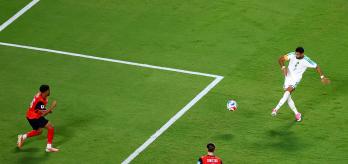
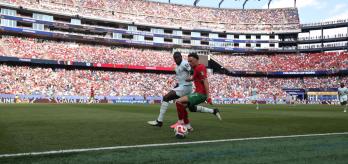
From dangerous corners and threatening penalty-area movement to Rafael Leão’s decisive cross for the winning goal, the same pattern kept appearing. Portugal slowed the game down, created overloads, switched play quickly and attacked the goal area with speed. This tactic reoccurred in different situations, but with the same threat: quality inswinging deliveries into dangerous central and back-post areas.
Watch analysis

Read summary
00:11
Inswinging corners
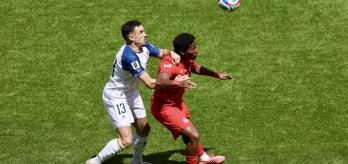
Portugal generated four attempts at goal from their nine corners against Croatia. All six corners that were delivered directly into the penalty area were inswingers. Tomasson highlights that Portugal’s corners into the penalty area were at an exceptionally high level, with players such as Nuno Mendes capable of finding predetermined targets with speed and precision. On the receiving end, several Portuguese players effectively block the zonal opposition players in the second area, giving their Portuguese team-mates the space to make late runs to the far-post area – often the primary target of their corners.
01:12
Inswinging crosses
Portugal attempted 15 crosses in open play, 14 of which were delivered from the wide channels (seven from the right and seven from the left). Of the 15, two were successful, with one leading to Gonçalo Ramos’s stoppage-time winner. However, some of those incomplete open-play crosses were also threatening, as seen in clips 4 and 5 below. Tomasson reveals that this high number was a result of an intentional build-up strategy. During build-up, Portugal’s midfielders dropped deep, alongside centre-backs to create overloads against Croatia’s frontline. Meanwhile, on one side of the pitch, attacking and wide players rotated in the wide channel and threatened the space in behind, intentionally drawing Croatia out wide. With their opposition drifting to one side, Portugal would then switch quickly to the other side, where they outnumbered their opponents and had time to deliver precise inswinging crosses.
Rate your experience