Learning platform
 en
en 


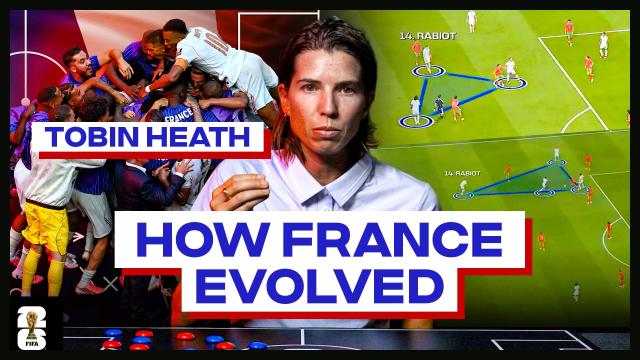
When France played Morocco in the semi-finals of the FIFA World Cup 2022™, Les Bleus secured a 2-0 win despite having only 34% possession. Considering the quality and depth of their squad, France’s low possession share suggested a shrewd tactical plan that encouraged Moroccan possession and created clear-cut chances in transition. After the two met in the quarter-finals of the FIFA World Cup 2026, Heath reveals a very different strategy at play in France’s 2-0 victory over the Atlas Lions – one characterised by aggression, selflessness and a unique rest defence.
Watch analysis
Read summary
00:03
France’s rest defence
The structure France’s defenders and midfielders deployed behind their attacks suffocated any Morocco transitions, and allowed Les Bleus to play more relentless and aggressive football than the calculated counter-attacking plan adopted in their previous encounter with Morocco four years earlier. Heath explains how the rest defence gradually took on an umbrella-like shape in the Boston Stadium, which wrapped around Morocco the deeper France moved into their opposition’s half. During these moments, centre-backs Dayot Upamecano and William Saliba were key. One would step into the final third to contest loose balls for his team, while the other defended the space in the middle third. The pair allowed France to sustain several attacking phases in the final third. Kylian Mbappé’s opener, for example, was preceded by two previous chances created by the team’s rest defence.
05:06
Speed and selflessness
The way France operated in defensive transitions was also impressive and unique, explains Heath. When Morocco managed to break free from the more advanced rest defence into the vacant wide channels, one member of the Saliba-Upamencano duo was responsible for closing these attacks down. Reliance on the two centre-backs in the exposed wide areas is only possible due to the pair’s frightening speed and 1v1 ability. In her analysis, Heath also reveals precisely how speed is exploited by France’s attacking players, who at times are in a “rest attack” structure when the opposition is in possession. Les Bleus attacking talent, such as Ousmane Dembélé, are focused on penetrating open space, irrespective of whether they receive the ball or not. The selflessness of these runs provides the team with an additional level of threat and is a large part of what has taken France’s performances to another level in this FIFA World Cup.

Rate your experience