Learning platform
 en
en 


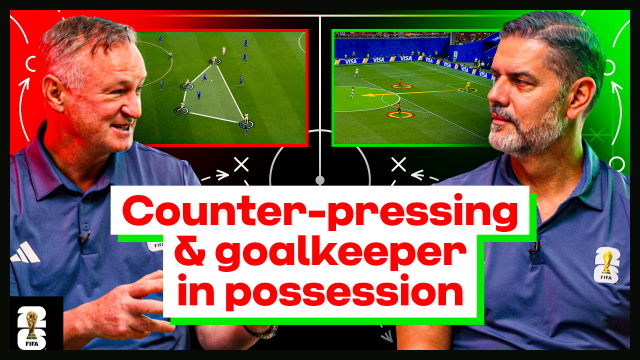
In this tactical review, Northern Ireland head coach Michael O’Neill and FIFA Senior Expert Pascal Zuberbühler break down the two defining trends from the group stage: how teams have used counter-pressing to control games, and the importance of goalkeepers during the build-up phase. In addition, our TSG experts dive into the latest FIFA Power Rankings.
Watch analysis
Read summary
00:50
Part 1: Counter-pressing
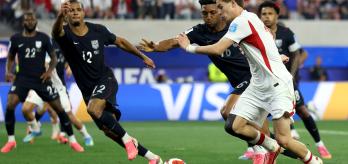
The TSG have identified counter-pressing as a defining feature of the group stage, with hosts USA and Canada among the teams setting the standard, as well as Ecuador and Cabo Verde. O’Neill explains that the most effective counter-pressing situations come from collective reactions immediately after possession is lost, with players pressing over short distances instead of chasing the ball individually. He also notes that teams counter-press for different reasons, either to sustain attacks or prevent counter-attacks. Both O’Neill and Zuberbühler stress that these behaviours must be coached and require the right athletic profile, while mentioning the impact the home crowd has on this intensity. In addition, they highlight the importance of a 3+2 rest-defence structure being used throughout the tournament, which provides a great springboard to counter-press aggressively while still protecting the space behind if the initial press is beaten.

09:21
Part 2: Goalkeeper distribution
Another key trend from the group phase was how goalkeepers have become an integral part of build-up play, acting as an extra outfield player, rather than simply restarting possession. Zuberbühler uses data to point out that just 52% of goal kicks have been taken by goalkeepers thus far, compared to 91% at FIFA World Cup 2022™. Instead, teams are increasingly choosing to use their centre-backs to initiate build-up, giving goalkeepers more time to assess the opposition’s pressing approach before getting involved. O’Neill explains that this allows keepers to create overloads and draw pressure from the opposition, and then identify whether to play short, through or over the press. Finally, both experts emphasise the growing importance of long-ball distribution, with goalkeepers such as Japan’s Zion Suzuki, Belgium’s Thibaut Courtois and England’s Jordan Pickford demonstrating how to progress up the pitch with a single accurate pass.
16:04
Part 3: FIFA Power Rankings
The discussion concludes with the latest FIFA Power Rankings for four categories: attacking, creativity, defending and goalkeeping. Regarding attacking, O’Neill and Zuberbühler focus on France’s Ousmane Dembélé, who rose 49 places to sit third, as well as Switzerland’s Johan Manzambi. Kylian Mbappé features prominently in both attacking and creativity, while Michael Olise leads the latter table. In the defensive rankings, Derek Cornelius remains top after superb displays throughout the group stage for Canada, while the experts commend the influence of holding midfielders Rodri and Casemiro, as well as Elliot Anderson. Lastly, the new goalkeeper rankings reflect the position’s evolving role, as discussed in Part 2, rewarding both shot-stopping and distribution. Cabo Verde’s Vozinha leads the in-possession category after an outstanding first three games, while Paraguay’s penalty shoot-out hero Orlando Gill leads the way in defending the goal.
Rate your experience