Learning platform
 en
en 


Of all the participants at the FIFA Club World Cup 2025™, no team opted to go short on corners more often than Chelsea. Their routine, starting with a clear pre-established structure, demands constant collective decision-making as play unfolds. Players must remain dynamic to the opponent’s defensive reaction and have the freedom to choose different solutions:
- combine to create a better crossing angle;
- circulate the ball to find a free player at the edge of the box;
- utilise a key player to shape the attack.
This article examines Chelsea’s set-up, analysing the possible impact on the opponent’s defensive organisation from some less conventional positioning.
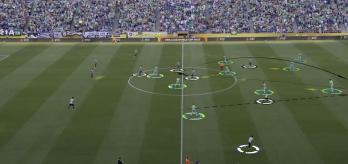
CORNER SET-UP

-
Taker: capable of executing corners with accuracy into the box as well as combining in tight spaces.
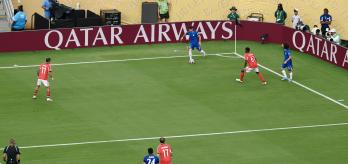
- Two players standing close to the taker: one often positioned along the goal line – not just to circulate possession but to constantly threaten depth once the ball is in play. Two players close to the ball forces opponents to release extra markers, immediately stretching their defensive coverage and diluting their presence inside the box.
- Three players positioned around the edge of the box: offering the option to circulate the ball and providing defensive security.
-
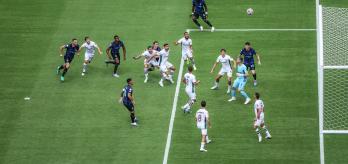
Four players inside the box: to attack the delivery.
SHORT TO CROSS
When faced with Chelsea’s set-up, opponents tended to be wary of committing too many defenders to the short corner as they wanted to maintain a strong presence inside the box but this left them at a numerical disadvantage out wide. Chelsea exploited these overload situations through quick combination play to create a better crossing angle. Each short passing exchange forces defenders inside the box to continuously readjust: pushing up, shifting laterally, or dropping deeper. This constant ball movement disrupts the opposition’s defensive organisation and increases the likelihood of attackers finding spaces to exploit inside the area.
Short to shoot
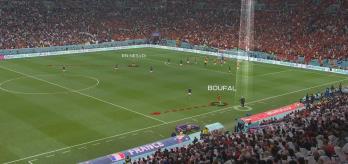
Opponents focused on denying the short pass into the box often leave the top of the area under-protected. As the opposition is lured to one side to defend the short corner, zonal defenders at the edge of the box can also be drawn wide or drawn inside the box to provide extra protection. This can free space at the top of the box, offering opportunities for a shot on goal with quick ball circulation.
Short to a key player
Chelsea's short-corner routine was also aimed to maximise the creativity and technical quality of Cole Palmer. His vision, composure under pressure, and ability to dictate the tempo were key assets. As defenders were drawn wide, Palmer sought to slip passes between the lines or recycle possession until the angle for a decisive action emerged.
Key takeaways
Chelsea's short corner routines at the FIFA Club World Cup 2025™, blurred the line between set-pieces and open play: they were structured yet flexible, which meant that they were constantly making collective decisions. This routine offers various outcomes:
- if opponents commit too few players wide, Chelsea can progress the ball into dangerous areas and destabilise the defensive organisation; but
- if the opponent commits numbers to deny the short option, Chelsea can work the ball to exploit space opened at the edge of the box or opt to play directly into a less digested penalty area.
Interestingly, Chelsea rarely looked to capitalise on the possibility of a direct delivery into a less congested box, perhaps a reflection of their commitment to a game model that aims to control possession, attract opponents to create space, and then exploit vertical passing lanes through player rotations and overloads.
Rate your experience