Learning platform
 en
en 


At the FIFA World Cup Qatar 2022™, Argentina proved that defending a corner with all ten outfield players back can provide a springboard to launch devastating counter-attacks, with a system in which at least one player is in a prime position to break forward. Further evidence of this strategy was on show at the inaugural FIFA Club World Cup™, at which both Al Hilal and Real Madrid often sought to quickly turn defence into attack following a corner kick.
Al Hilal v. Manchester City – FIFA Club World Cup 2025™
-
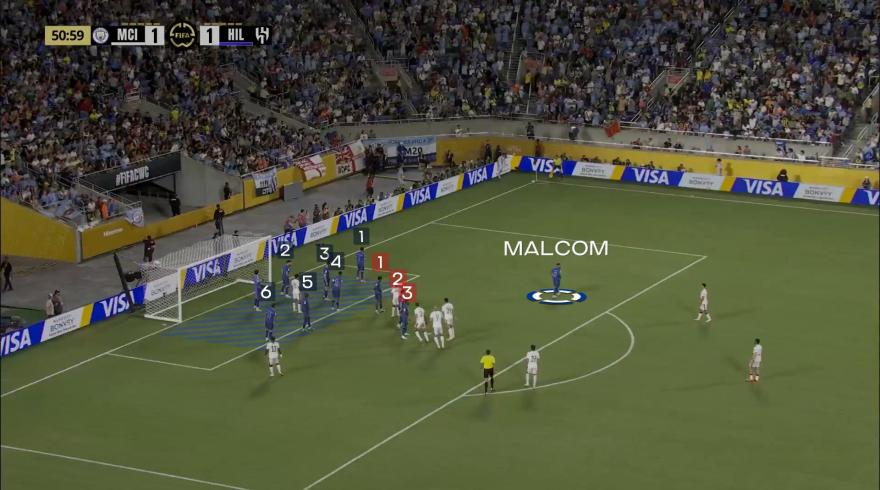
Al Hilal use a combination of zonal and player-to-player marking, with six players defending zonally inside the 6-yard box and three players picking up Manchester City players around the penalty spot. Meanwhile, Malcom is zonal-marking close to the edge of the penalty area.
-
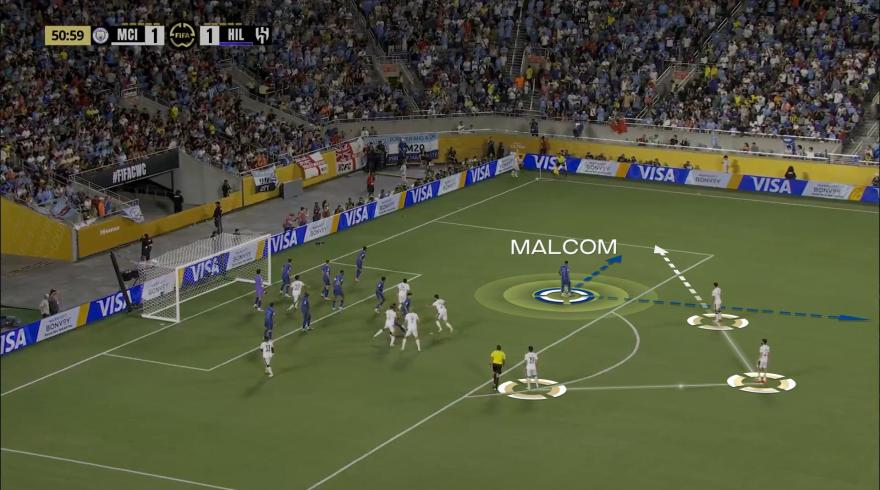
Positioned as his team’s highest player, explosive forward Malcom is primed to exploit the space in behind the City backline.
-
Malcom’s position also means that he is close enough to provide defensive cover, protecting the edge of the box and the short-option.
-
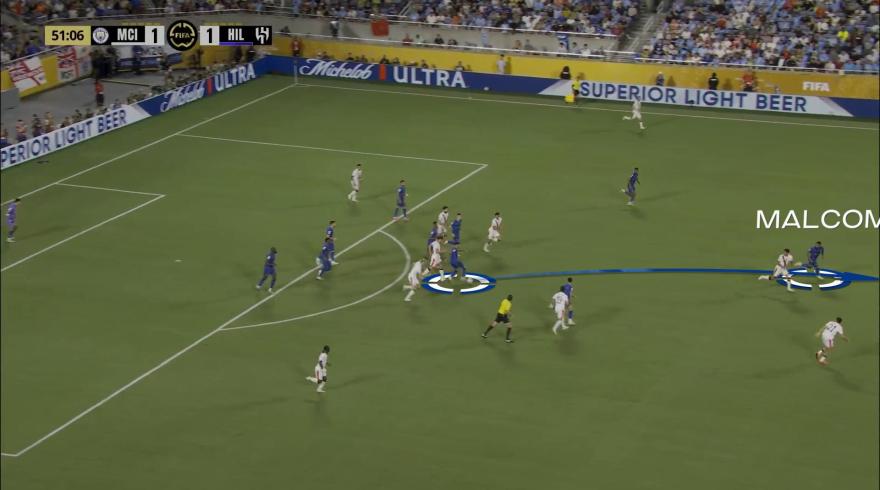
In order to gain a decisive advantage without compromising his team’s defensive solidity, it is key that the Brazilian speedster identify the right moment to initiate a forward run.
-
The player who makes the clearance or picks up the loose ball is encouraged to adopt a direct attacking approach and immediately release Malcom into the space in behind.
Real Madrid v. Juventus – FIFA Club World Cup 2025
-
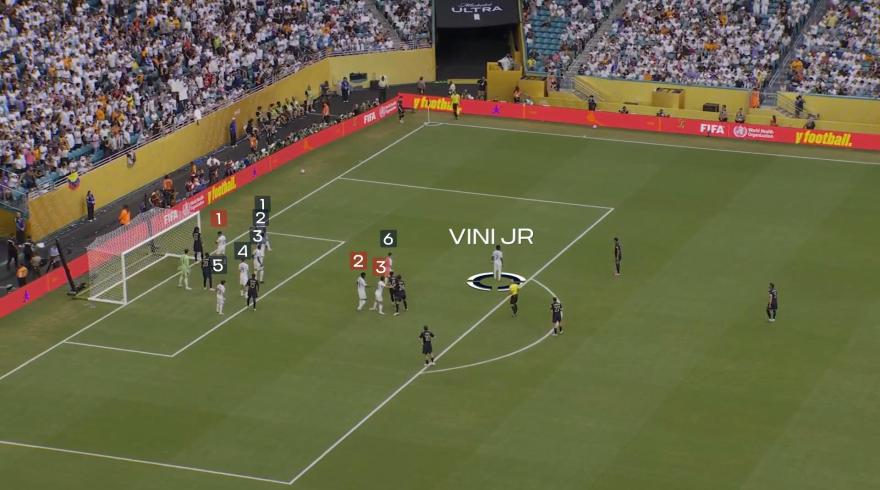
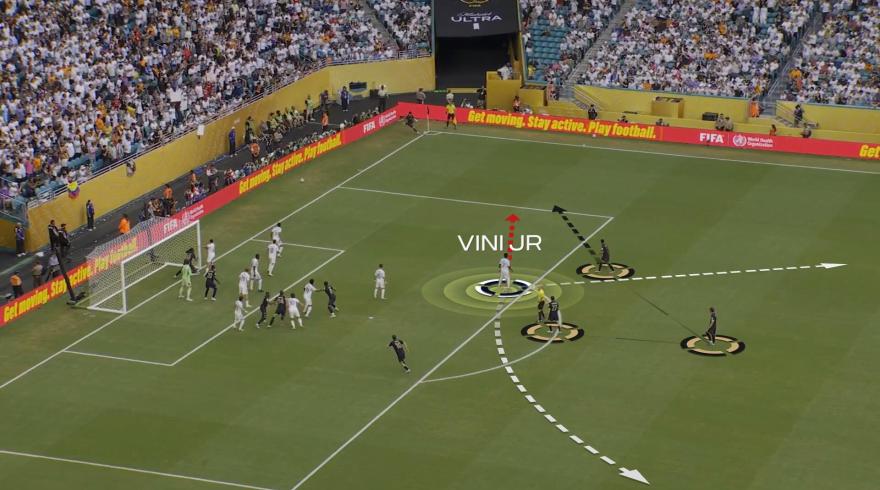
Real Madrid defend with a mixed-marking system, in which five zonal players form a staggered line, 1 further zonal player is positioned zonally close to the penalty spot and 3 players are tasked with picking up individual opponents. Meanwhile, Vinícius Júnior occupies a position on the edge of the box.
-
Vinícius Júnior's position as his team’s highest player makes him the natural outlet to receive defensive clearances or when goalkeeper Thibaut Courtois looks to release the ball quickly.
-
Positioned zonally, he is not manipulated by the movements attackers inside the box and is able to defend players offering short.
-
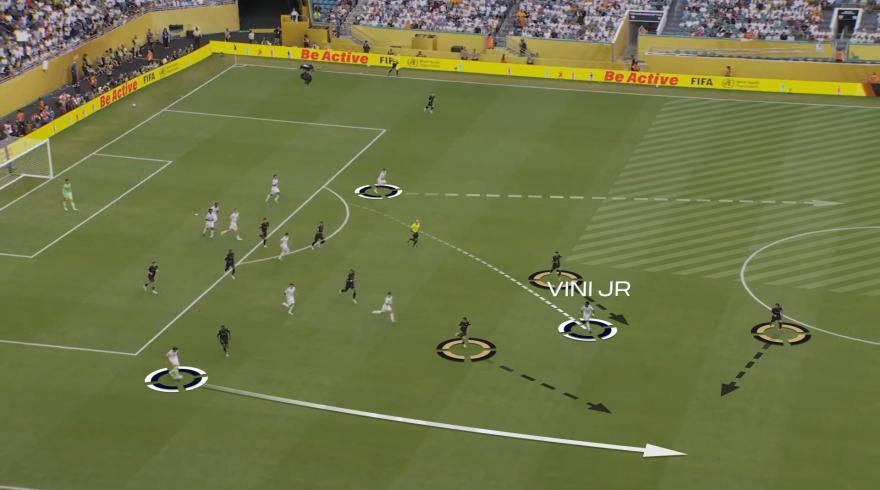
Every clearance becomes the first pass in a transition, with Vinícius Júnior spearheading a system designed to transform risk into opportunity.
-
The Brazilian's gravity to attract the attention of opposition players, who track him tightly or attempt to block his path, enables his team-mates to exploit the large spaces that he creates.
-
Transitions are executed with minimal touches, with the focus on speed and directness to exploit the Turin giants’ disorganised backline.
Argentina v. Croatia – FIFA World Cup 2022™
-
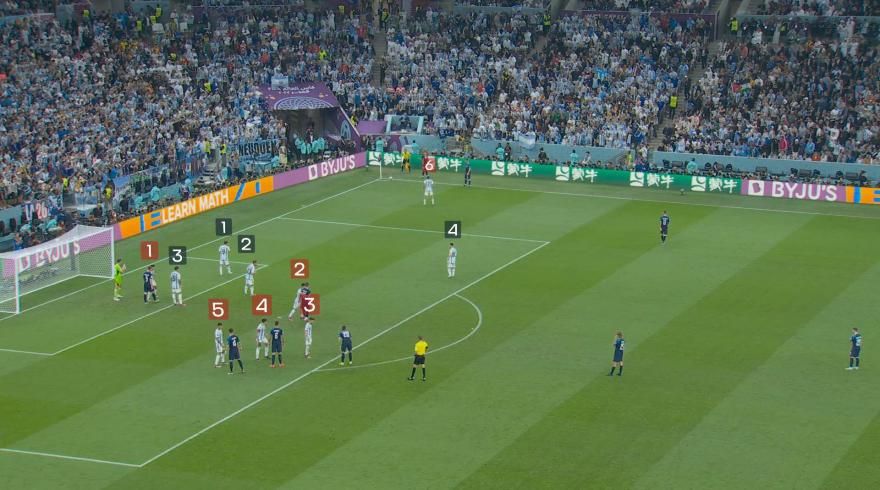
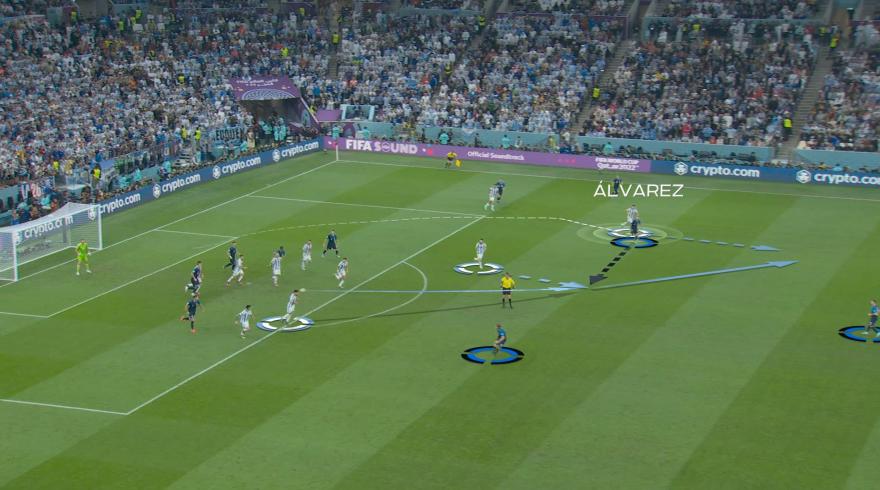
Argentina deploy a mixed-marking strategy, with five players each getting tight to a Croatian opponent inside the box and another Argentinian player ready to close down the player offering the short option at the corner. Four Albiceleste players are assigned to zones, three of whom are stationed at/towards the near post, with Messi covering the edge of the penalty area.
-
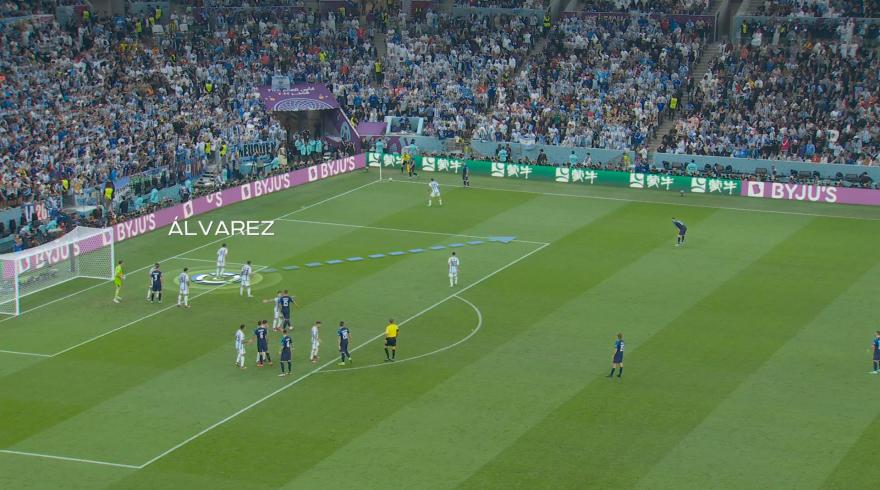
High-octane frontrunner Julian Álvarez is asked to mark zonally at the near post and to press the Croatians if they opt to take a short corner. Giving Álvarez a zonal marking role means that the opposition are less likely to influence his positioning.
-
If the opposition play short, Álvarez jumps out to apply pressure, leaving him perfectly positioned to break forward should Argentina turn over possession.
-
Argentina execute the transition with minimal touches, prioritising speed and a direct attacking approach with a view to exploiting Croatia’s unorganised backline.
-
Álvarez’s team-mates flood forward in support to further unsettle the Croatian defence.
Key take-aways
A defending team’s ability to turn a corner into an attacking opportunity, even when all ten outfield players are defending, revolves around far more than just clearing the ball effectively, it requires a well-defined strategy and real intent. The four elements outlined below play a central role when a team seek to transition quickly into attack following a corner kick.
- Defined attacking outlets: At least one player is positioned and ready to break forward as soon as possession is regained.
- Capitalising on player strengths: It is important that dangerous attackers are given defensive roles that allow them to break forward and exploit key individual attacking attributes, such as Malcom’s acceleration, Álvarez’s intensity and Vinícius Júnior’s ability to attract opposition players.
- Zonal-marking defensive roles: Handing attacking players zonal marking responsibilities can help to ensure that their positions are not influenced by the opposition.
- Direct attacking approach: Clearances should be well directed and seek to exploit both open spaces and out-of-position opponents who are still committed to the set-play scenario. Team-mates should be quick to arrive to offer the ball carrier a range of passing options and further disrupt the opponent.
Rate your experience