Learning platform
 en
en 


Across recent FIFA World Cups™, direct free-kick goals from 25m or further have become increasingly rare, with teams often favouring indirect routines or deliveries into the box rather than shooting directly at goal. This trend reflects several key factors:
-
More organised defensive structures → less space and better wall positioning
-
Higher-level goalkeeping → improved reaction, positioning and flight reading
-
More controlled attacking approaches → fewer direct attempts from distance
And yet, a small number of specialists continue to find solutions. Their ability to adapt their technique, surprise the opposition and exploit the smallest margins is what keeps long-range free-kicks relevant – and often spectacular – within the modern game. This article explores the different technical solutions used from long range, showing how players interpret and execute these situations in different ways.
SOLUTION 1: CURL OVER THE WALL
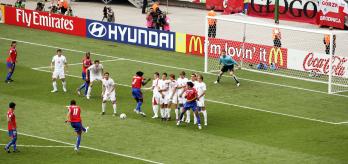
This solution is based on a controlled spin and allows the free-kick taker to move the ball around the wall of defenders and increasingly further away from the goalkeeper. Different players apply this technique with variations in approach, contact and trajectory, but the objective remains consistent: combine height, curve and accuracy to reach the far side of the goal.
In focus – David Beckham
Few players embody the free-kick specialist like David Beckham. Built on repetition, precision and exceptional control of the ball’s flight over long distances, the former England captain’s technique reflects the same qualities that defined his crossing and long passing. His goal against Colombia in 1998 captures this identity perfectly: a strike based not on power, but on timing, control and a remarkably consistent, repeatable execution.

Solution 2: KNUCKLEBALL
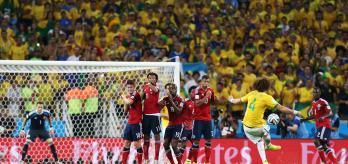
The knuckleball is a solution that reduces spin, allowing aerodynamic forces to introduce late, unpredictable movement. Instead of guiding the ball, the striker creates instability – forcing the goalkeeper to react to a trajectory that becomes clear too late.
In focus – David Luiz
Throughout his career, David Luiz has been recognised more for his physical presence and defensive qualities than for refined technical execution, yet his free-kick against Colombia in 2014 shows how a non-traditional specialist can produce one of the most striking long-range actions in modern football.
Solution 3: POWER IN-STEP STRIKE
The power in-step strike maximises velocity, reducing the goalkeeper’s reaction time rather than relying on complex ball movement. Here, the emphasis shifts from trajectory manipulation to pure striking force, sometimes combined with slight directional variation.
In focus – Roberto Carlos
Roberto Carlos represents one of the most extreme examples of the power in-step technique, with an approach around generating maximum velocity through his physical attributes and unique mechanics. The Brazilian full-back’s executing goes beyond simple force, combining a coordinated full-body action with explosive movement to produce occasional and unexpected changes in direction.
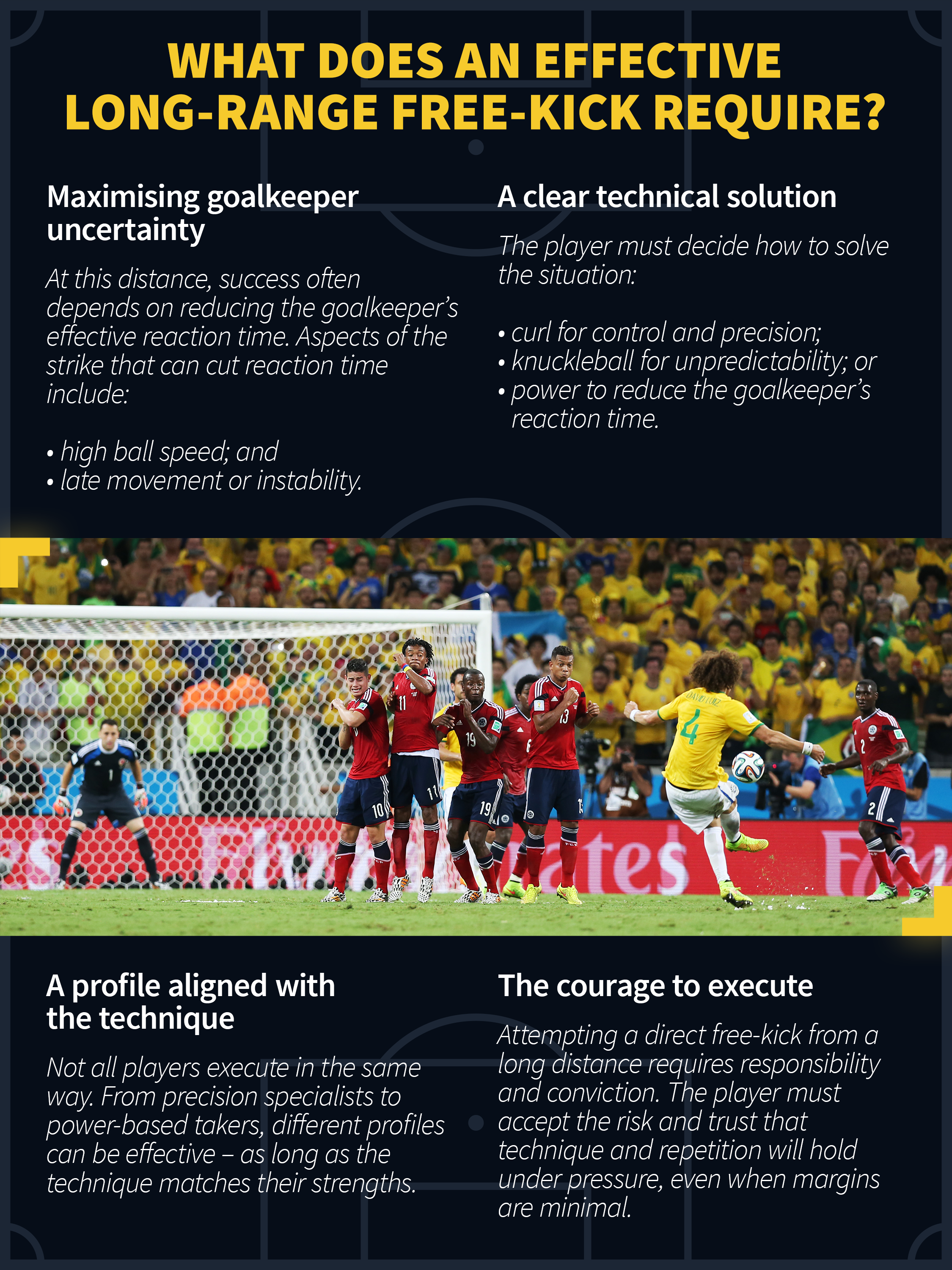
What does an effective long-range free-kick require?
Rate your experience