Learning platform
 en


Reading the game is only useful if goalkeepers can turn what they perceive into effective decisions and actions. Following the analysis of the patterns that shape a goalkeeper’s decisions, this webinar considers how coaches can develop those abilities through practice.
Futsal is dynamic and unpredictable. The ball, players, space and timing continually influence one another, so a goalkeeper’s response cannot be reduced to a fixed sequence of movements. The coach’s challenge is to create training situations that help goalkeepers understand the game, adapt to it and solve problems independently.
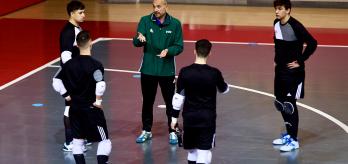
Training in game context
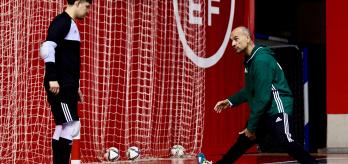
Goalkeeper-specific work can help players become familiar with particular techniques. However, when goalkeepers always train separately from the team, they may miss many of the cues and interactions that shape their decisions in a match.
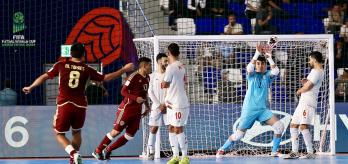
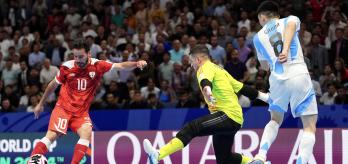
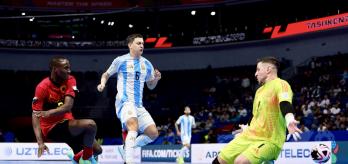
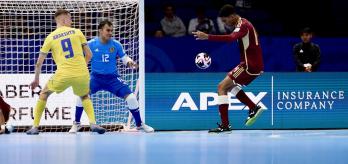
Coaches can bring the goalkeeper into situations involving team-mates, opponents and the ball, so that practice includes relevant information from the game. This might include an attacker’s movement and body orientation, the position of a defender, the distance to goal or the options available to the player in possession.
The aim is not to recreate an entire match in every exercise. It is to retain enough of the game’s context for the goalkeeper to perceive and respond to a meaningful situation.
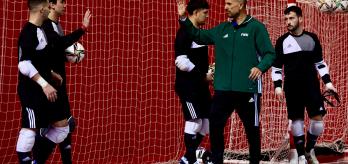
Set problems, not answers
A goalkeeper can be instructed in advance to move towards a post, move laterally, or block in a particular way. While such guidance can introduce an action, relying on predetermined sequences risks turning practice into choreography that leaves little room for decision-making.
Instead, coaches can pose a game-related problem with more than one possible solution. The goalkeeper must read the game and choose a response. As the ball, the attacker or the defender moves, the situation may change, and the goalkeeper may need to adapt their decision.
The coach’s role is to shape and guide the challenge rather than provide a single solution for every scenario. Goalkeepers may find creative responses that the coach has not prescribed. Giving them space to explore, make decisions and experience the consequences can support greater adaptability and autonomy.
Technique in context
Technique remains essential: it is how the goalkeeper uses their body to act on a decision. Nevertheless, technical actions do not happen in isolation during a match. A block, a lateral movement or an intervention towards the far post will be affected by the ball’s location, the attacker’s distance and orientation, the goalkeeper’s position, and the presence of defenders.
Therefore, training should help goalkeepers adapt their technique to the problem in front of them. This does not mean neglecting technical work. It means giving the action a purpose and helping the goalkeeper understand when and how it may be useful in different situations. Technique and tactics are closely connected: the decision helps shape the action, and the action is performed within the demands of the game.

Build adaptability
An intelligent goalkeeper must attend to relevant information, anticipate possible developments and adjust their response as the situation unfolds. Anticipation is not just about guessing what will happen. It involves reading cues in the game — such as the ball, the attacker’s body orientation, the position of defenders and the options available to other players — and using them to prepare for what may come next.
The goalkeeper must also interact with team-mates and opponents. Training should create opportunities to communicate and coordinate with other players, rather than repeatedly treating the goalkeeper as an isolated performer. These interactions help make the situation more representative of the game and require the goalkeeper to adapt to other players’ actions.
Experience is another important part of development. Coaches can use purposeful, game-related practices to help goalkeepers build experience, including those who have had fewer opportunities to gain it in competition. The goal is not simply to accumulate repetitions, but to encounter meaningful situations that develop perception, decision-making and adaptability.
Assess the decision
When an intervention is unsuccessful, the visible technical action may be the easiest part to identify. Yet the source of the problem may lie earlier: in what the goalkeeper noticed and how they interpreted the situation or the decision they made.
Furthermore, coaches can review the whole sequence, from the information available to the goalkeeper through to the decision and execution. Technical and tactical elements are difficult to separate in a game situation. A technical error may be clear to see, but understanding the context can help reveal whether the goalkeeper’s choice also contributed to the outcome.
The coach can support this process with guidance and feedback, while avoiding the assumption that there is a single formula for every situation. The aim is to help goalkeepers recognise important features of play and become increasingly able to make effective decisions for themselves.
Ultimately, goalkeeper performance is measured by the ability to solve problems in the game: preventing goals, managing danger and, when appropriate, contributing to the attack through distribution. Coaches can help goalkeepers reach that level by creating open, representative environments where they learn to read the game, decide and adapt.
Key take-aways
Rate your experience