Learning platform
 en
en 


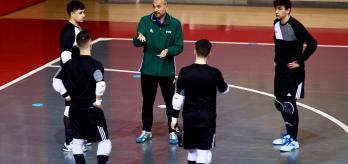
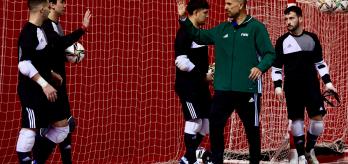
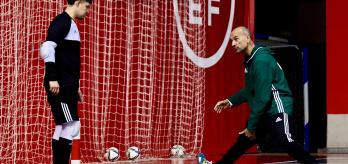
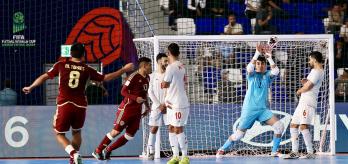
In this webinar, Antonio García, FIFA Futsal Technical Expert and Spain’s national futsal goalkeeper coach, presents Understanding Disadvantaged Situations from the Goalkeeper’s Perspective. Participants learn how to analyse and manage these moments. The webinar consists of four parts, and this opening article focuses on Part 1. It introduces the concept of disadvantage, explains how dangerous situations develop, and explores the goalkeeper’s tactical and individual decision-making.
Understanding disadvantage
The first section addresses the question: What does it mean for a goalkeeper to defend from a position of disadvantage?
Disadvantage occurs when the defending team is less favourably positioned than the attacking team. It can be:
-
Numerical: The attackers have more players available in the relevant area.
-
Positional: Defenders are poorly positioned relative to the ball, goal, or opponents.
-
Qualitative: An attacker has an individual advantage, such as greater speed or technical ability.
-
Socio-affective: Communication, trust or coordination between team-mates is not effective.
-
Dynamic: The attackers gain an advantage through movement, timing or changes of speed.
The final third is particularly important because most finishing actions take place there. To analyse what the goalkeeper can influence, the webinar introduces three zones:

This shared language helps coaches and goalkeepers identify the type and extent of the disadvantage before evaluating the response.
How defensive disadvantage is created
The next section examines the question: Where do dangerous situations come from?
Disadvantage often appears during the defensive transition after a team loses possession. The attacking team can exploit the brief moment when defenders are changing from attack to defence, recovering their positions or clarifying their responsibilities.
However, transitions are not the only source. Disadvantage can also be created by:
-
a successful dribble that eliminates a defender;
-
a combination between two or three attackers;
-
an attacker breaking or surpassing a defensive line; and
-
movement, body orientation or changes of speed that create extra time and space.
From the goalkeeper’s perspective, each situation requires an assessment of the ball, the attackers and the defenders’ ability to recover. Understanding how the disadvantage began is essential before judging the goalkeeper’s decision.
The goalkeeper’s tactical response: action or inhibition?
The third section asks: When should the goalkeeper intervene, and when should they hold back?
The two fundamental behaviours are:
Action is not always the best solution. A goalkeeper who leaves the goal too early may create space behind them or lose the ability to respond to a pass, shot or second action. Although goalkeepers are naturally drawn towards the ball, delaying the first movement can create a better opportunity to intervene from another position.
Video examples compare visible action with effective decision-making. The important question is not simply whether the goalkeeper acted, but whether the decision reduced the danger. Therefore, inhibition is a deliberate way to control space, preserve options and wait for clearer information, rather than simply passivity.
Decision-making in context
The final section considers: Why can the same situation require different solutions from different goalkeepers?
Futsal is a sport of interactions. The goalkeeper and defenders influence each other continuously through their positioning, communication and movement. A goalkeeper’s decision affects the defenders, just as the defenders’ actions affect the goalkeeper’s options.
The coach or analyst may see the situation differently from the goalkeeper, who must make a decision in real time and often with incomplete information. Individual characteristics also matter, including:
-
speed, height and reach;
-
physical and motor profile;
-
training and match experience; and
-
emotional state.
There is no single correct solution for every goalkeeper or every situation. Tactical performance depends on perception, decision-making, execution, team-mates and individual characteristics. This leads to an important final question: How much of a goalkeeper’s error is technical, and how much is tactical?
Key take-aways
Rate your experience