Learning platform
 en
en 


Holocher has a lot of skin in the game, having played professionally in the United States, represented the US men’s national team, and spent time in Europe with Austrian outfit Admira Wacker. After more than two decades of coaching, he joined Christchurch United, buying into the club’s vision of becoming the first professional team on the South Island – a milestone that has since been achieved.
In this interview, Holocher discusses his work at Christchurch United, the realities of grassroots football in New Zealand, and how the club is building a consistent development framework from the youngest age groups through to the senior environment.
KEY POINTS
-
New Zealand’s isolation and small population place added importance on starting player development early and aligning approaches nationwide.
-
Christchurch United builds player development around ball mastery, beginning as young as four through small-sided games and the “FUNino” method.
- Holocher and the club believe in transparency and collaboration with other coaches, citing a philosophy of “a rising tide lifts all boats”.
Watch interview
Part 1: Understanding the landscape of football in New Zealand
Holocher points to New Zealand’s geographical qualities as a defining factor in its football culture. “We are two big islands that are quite remote from the rest of the world. That poses a very unique challenge,” he says. As a result, Christchurch United often must look thousands of miles away for sources of inspiration. “We always have to take stock of what’s happening around the world, looking to great footballing cultures.”
Navigating a remote football ecosystem
He highlights several structural challenges faced by the club:
-
geographic isolation limits exposure to elite competition and coaching ideas;
-
a small population reduces the player pool available, increasing the importance of grassroots development; and
-
alignment across clubs and coaches is easier than in larger nations but requires deliberate coordination.
Our focus is starting off well with young players in the grassroots ages and helping them fall in love with the ball and become skilful and intelligent young players.
Moreover, the change in footballing cultures from his native USA to his role at the New Zealand club has been stark for the experienced coach. “The United States is enormous,” he says. “It’s more of a continent than a country. With that size comes huge resources and infrastructure, but that’s not always a good thing.” He states that the nation’s population gives them the chance of being more unified and allows them to create coherent, aligned development philosophies that are easier to implement.
Overall, Holocher claims that grassroots coaches on the islands have benefited from updated education programmes run by the New Zealand Football Association (NZF), including new game formats for young children, such as 3v3s for ages 5–7 and 5v5s for U8–U9. “Smaller numbers are a new format for the country, which is great.” However, he notes that informal mentoring and on-field support could further improve the quality of coaching and the environments players experience.

Part 2: Developing the grassroots game at Christchurch
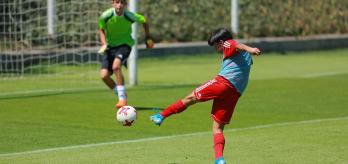
Holocher states that the grassroots game has been a major focus for Christchurch United and that the club are aiming to develop players who are comfortable on the ball.
The two key pillars of player development
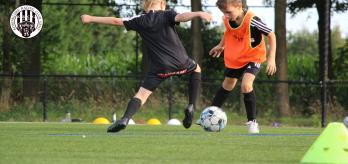
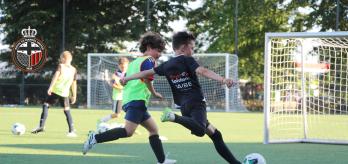
From as young as four, players work on ball mastery using the “FUNino”, developed by German coach Horst Wein. FUNino prioritises:
-
3v3 small-sided games
-
creativity and decision-making
-
core technical skills over fixed positions
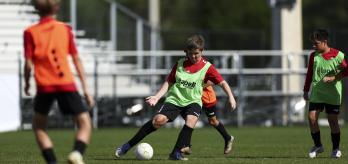
Children in the age category of 9-12 move onto more complex training, says Holocher, which includes:
-
rondos
-
positional games
-
conditioned games
The objective of this progression is to create players who are, “Comfortable with the ball, skilful with the ball, and just love the game.” From this category and above, the aim is to improve individual development within the collective through two key pillars: universal themes and deliberate training.
Universal themes define the recurring qualities that Christchurch United believe underpin high-level performance, such as perception, decision-making, positional understanding, technical execution, transitional play and communication. Meanwhile, deliberate training outlines how these qualities are developed through focused, challenging and feedback-rich sessions.
Vertical integration and partnerships
This idea of the vertical integration of playing styles and coaching philosophies from the youngest age groups through to the first team is of high importance to the club, notes Holocher, citing FC Barcelona as a primary example. For him, the game model of Christchurch involves controlling possession, dominating transitional moments and dynamism in attack. “That message starts very early, from U-8 all the way up, and all our coaches learn together, share together and have that game model that guides us.”
Coaching at Christchurch United combines technical, tactical and cognitive elements. The club has a developmental partnership with the TOVO Academy in Spain, focusing on building intelligent decision-makers. Holocher and the club also believe in transparency and collaboration, sharing training methods and exercises with other coaches.
A rising tide lifts all boats.
“We have a strong growth mindset inside our club. We always want to get better, and at the same time, we want to help. We want to support our neighbours in the game and help coaches from every club improve, if they’re motivated — learning from them and sharing with them as well,” he says.
Part 3: Supporting coaches and building for the future
A key aspect of Holocher’s role on the South Island is to support and develop coaches at the club. He supports staff through:
-
weekly informal mentoring
-
regular communication across age groups
-
collaborative workshops to review matches and training
I speak with almost every coach on a weekly basis.
Holocher mentions that the coaches have freedom to be creative on the training ground and in games, but must operate under a clear developmental framework to ensure that everyone around the club maintains their shared vision.
Aligning coaching structures and boosting accessibility
Holocher says that another way to ensure that everyone at the club is aligned with the shared vision is the coaching structure, as senior academy coaches get to work with younger age groups. This helps to bridge the gap between phases and ensures that the messaging remains consistent across all age categories. Again, this shared responsibility reinforces a common vision and prevents disconnect between the grassroots, the academy and the senior levels.
Finally, Holocher discusses accessibility at Christchurch United, a central concern for a club on an island with a diverse range of backgrounds. He says the aim is to make football accessible for every child by running outreach programmes that include:
-
free school clinics
-
invitations for schools to visit club facilities
-
community tournaments and events
-
partnerships with clubs to share resources and knowledge
Summary
-
Geographic isolation on the South Island of New Zealand has pushed Christchurch United to prioritise early technical development, using small-sided formats to help players fall in love with the ball.
-
At Christchurch United, a vertically integrated methodology prioritises ball mastery and consistent playing principles from the youngest age groups through to the first team.
- Coach education at the club is driven by weekly mentoring, collaborative workshops and a shared vision across all age groups.
Rate your experience










.variant64x64.jpg)

.variant348x164.jpg)