Learning platform
 en
en 


Learning
-
Building sustainable talent pathways through knowledge sharing
-
Collaborating with stakeholders to ensure strategic alignment
-
Disseminating knowledge from FIFA Talent Development Scheme
The FIFA Talent Academy and sustainable player development
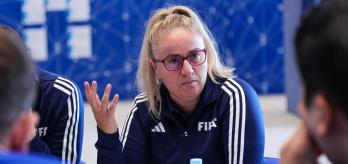
The Football Federation of Kosovo are using knowledge sharing to help build a sustainable talent pathway across the country, says Sanije Krasniqi, FIFA Talent Academy and Talent Development Scheme Lead for Kosovo.
“Opening the FIFA Talent Academy in 2026 was an important milestone for the Football Federation of Kosovo, but we see it as the beginning of a longer journey rather than the final achievement,” explained Krasniqi, who also works as the federation’s Director of Coach Education. “I want to make sure that the knowledge and methodology we gain through our collaboration with FIFA is shared beyond the Academy, so that the project can have a wider impact on football development in Kosovo.

Sharing knowledge from the FIFA Talent Academy can make a positive impact across all areas and levels of the Kosovan football ecosystem, believes Krasniqi.
“The next step is to make sure that the FIFA Talent Academy becomes an integral part of our overall talent development system,” she said. “We want to continue strengthening talent identification, individual player development, coach development and the connection between the FIFA Talent Academy, clubs and our national teams.”
Creating a sustainable pathway for young talented players
When Kosovo launched its Talent Academy in September 2026 – nine months after it began the project – it became the fastest federation to achieve this milestone. A typical timeline to launch the project is two years.
The academy now serves 40 talented U-14 players: 20 boys and 20 girls. However, the project’s success will be measured by long-term impact, says Krasniqi.
“Success should not only be measured by how many talented players we identify, but by the quality and sustainability of the pathway we create for them,” she says. “Of course, we want to see players progressing through the Academy and eventually into our youth and senior national teams, and hopefully reaching high levels of football. But success is also about creating better development environments, improving coaching quality and building a system that can continue developing players over the long term.
“Another important success criterion is whether the knowledge and methodology from the project become embedded within our federation and are shared with our coaches and clubs. If the Academy helps raise the overall standard of talent development in Kosovo, then I believe we can consider the project successful.”
The role of collaboration in long-term success
Krasniqi’s role in the knowledge sharing process is one of ‘co-ordinator’: ensuring a variety of stakeholders are connected around a common direction for talent development.
“Ultimately, I see my role as helping to build a sustainable pathway for talented young players in Kosovo, while ensuring that the knowledge, methodology and opportunities created through the FIFA Talent Development Scheme have a long-term impact on our football system.
“I have the opportunity to connect different areas of football – talent development, coach education, clubs and national teams – and help create a more aligned pathway for our young players. This means working closely with FIFA, our Talent Coach, the technical leadership of the Football Federation of Kosovo, local coaches and other key stakeholders.”
FIFA Technical Leadership Diploma network
Knowledge sharing, collaboration and utilising a global network of technical leaders are skills Krasniqi has learned on the FIFA Technical Leadership Diploma, from which she hopes to graduate at the end of this year.
“The FIFA Technical Leadership Diploma has supported me a lot in my role, especially in developing my leadership skills, working with different stakeholders, influencing others and making decisions. One of the most valuable parts has been learning from other technical leaders and sharing experiences from different football environments.
During her participation in the FIFA Technical Leadership Diploma, Krasniqi underlined the benefit of FIFA Talent Academy case studies presented by different federations.
“Seeing the experience of others inspired me to explore the same opportunity for Kosovo, apply for the project and help bring the FIFA Talent Academy to our country. For me, this is a great example of how the FIFA Technical Leadership Diploma learning can be directly applied in our daily work and create a real impact.”
Summary
-
Sharing knowledge across the football ecosystem can contribute to long-term success.
-
Success is defined as the long-term strength of the talent pathway.
-
Develop a network of contacts who have experienced similar projects and challenges.
Rate your experience