Learning platform
 en
en 


Learning
-
The importance of understanding the culture and context of a new organisation
-
Why “connection before correction” is key for new technical leaders
-
How to adapt best practices from other cultures to fit a new environment
Zooming out before zooming in
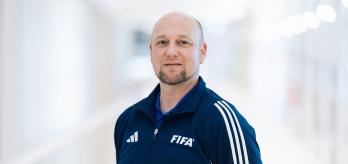
Taking time to analyse an organisation’s context and culture is a crucial part of a new technical leader’s first 100 days in role, says Timo Jankowski, Technical Director of Youth Development at Swiss club, FC Basel.
“When I joined FC Basel, I decided to come in six weeks before the new season started to just observe the culture and behaviour with a ‘helicopter view’,” explains Jankowski, who previously held the role of Technical Director at the Fiji Football Association. “At the same time, I invested a lot of time in researching current best practices from other academies. This ‘zoom out’ approach helped me a lot in order to purposefully ‘zoom in’ after the first 100 days.”

One of Jankowski’s early observations was the club’s history of success at youth level. “Because of the expectations at the club, there was a tendency to move too far from a player-centred approach,” he explains. “‘Winning at all costs’ was sometimes more important than winning with a certain style that is optimising player development.”
Importantly, Jankowski respected the importance of success at youth level and looked to build on the club’s history rather than discard it. “For me, the essence and number one task of an academy is to develop home-grown players for the first team,” he explains. “But of course we respect the winning DNA of the club as well. We have developed the phrase ‘Train to develop and develop to win’ as a guide for what we do. It is a nice mix to move towards a more player-centred approach but still keeping the winning DNA of the club. The approach is a nice challenge.”
Why “connection before correction” is key for new technical leaders
During Jankowski’s first 100 days at FC Basel, the Technical Director for Youth Development organised a series of one-to-one discussions with players and staff. “When I joined the club, I tried to have as many one-on-ones with staff and players as I could,” said Jankowski, who has held a variety of coaching positions in both Switzerland and Germany. “I wanted to get as many different perspectives as possible. Further, I tried to bring alive the sentence ‘connection before correction’. That is not an easy thing to do in a fast driven environment like football.”
If you want to go fast, go alone; if you want to go far, go together.
Connecting with staff has been aided by a number of ‘tools’ introduced on FIFA’s Technical Leadership Diploma, from which Jankowski recently graduated. “One learning from the Diploma was: ‘if you want to go fast, then go alone; but if you want to go far, you have to go together’. So, I am trying to think a lot about the next steps, but also to ensure at the same time that I am involving everyone. By learning from each other we have a higher chance to increase the quality of a good process.”
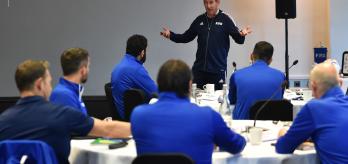
Jankowski also encourages colleagues to gather on a weekly basis to exchange ideas and updates.
“Another specific ‘tool’ we have put in place is the great idea of the ‘intercambio’ [an exchange between staff members], which we have every Tuesday at FC Basel. It has really helped us to connect as a group and make everyone part of the process.”
Adapting best practices from other cultures into a new environment
Before joining FC Basel, Jankowski was Technical Director at the Fiji FA. During four years in Fiji, he helped develop the game at all levels and learned some important lessons about high performance.
“My biggest learning during my time in Fiji was that high performance is not so much infrastructure or facilities, it is first and foremost a special mindset to always make the best out of what you have and to never complain, but, instead, try to improve the situation.”
Fiji’s gold medal-winning rugby team proved to be a source of inspiration for Jankowski. “I got inspired a lot by observing the Fiji rugby team that won the Olympic gold medal twice,” he says. “They are national heroes in Fiji. They train in the sand dunes with very limited equipment and most of these players are not professionals, as they work as farmers or police officers to make a living. The mindset they had was to make the best out of everything. It was absolutely inspiring and a high-level performance mindset.
“We transferred this learning and mindset into the football environment in Fiji, which I believe set the foundation for us to qualify for four different youth World Cups in four years. We changed from complaining about difficult circumstances to seeing these difficult circumstances as a strength. There is even a Fijian saying of ‘Tabusoro’ that we installed as a core value and that can be translated to ‘strong brains never give up’.”
Jankowski has transferred this idea into his work with FC Basel. Both staff and players have been challenged to develop “strong brains” to go alongside their high-performance facilities. “We try to inspire our staff and think about what could be possible if a high-performance mindset and high-performance facilities can be combined in the best possible way.”
Summary
-
Technical leaders should take time to analyse their new organisation and understand the context and culture
-
Build connection with colleagues by taking time to meet staff and players on a one-to-one basis
-
Adapt best practices from other cultures to fit into a new environment
Rate your experience