Learning platform
 en
en 


Learning
-
How technical leaders can build trust through consistent behaviour
-
The role of self-awareness in developing values and beliefs
-
Developing a culture from repeated behaviours over the long-term
Consistency and standards
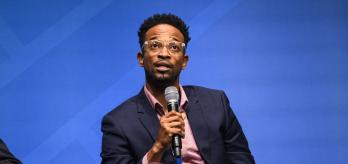
Displaying consistent behaviours can help technical leaders positively influence their organisation, says Theon Gordon, Director for Technical Matters at the Saint Vincent and the Grenadines Football Federation.
“My own behaviour sets the tone and sets the example for everyone in the organisation,” explains Gordon, who recently graduated from the FIFA Technical Leadership Diploma. “If I live certain behaviours myself, then others will buy in. If I don’t, it’s very hard for other persons to accept.”
The culture is built when behaviours are shown over and over. The messaging, language and behaviours have to be repeated.
Gordon, who has held the role of head coach for his country’s men’s team, believes consistent positive behaviour over time is the best way to help shape a culture. “Leading by example is also about consistency,” he says. “The culture is built when behaviours are shown over and over. The messaging, language and behaviours have to be repeated. Also, it’s not enough to only talk about the standards, you have to uphold them, so you have to keep people accountable.”
Leading by example starts with developing self-awareness and understanding your own personal values, says Gordon, who represented his country as both a senior and youth player. “It all starts with self-awareness,” he explains. “It begins with clarity. I have to be clear on what I stand for, who I am, my values and how I plan to work. Once I am clear on who I am, how I want to lead and what I need to accomplish, then it's all about leading by example.”
Delivering sustainable success
Gordon attributes his developing self-awareness to his recent participation on the FIFA Technical Leadership Diploma. “I definitely developed my self-awareness on the Diploma,” he says. “The programme challenged me to reflect on how I lead, how I communicate, how I behave and how my behaviour affects others. That has been important in helping me to grow not just as a technical leader, but more so as a person.”
Through self-awareness Gordon believes he is in a better position to effectively lead a technical department. “I believe I have developed the understanding that leadership at this level is more about creating an environment where good work can consistently happen,” he explains. “It has involved shifting my thinking from being ‘hands-on’ to being focused on systems, culture, structure, as well as people. Then it moves into legacy.
“I took a lot from the idea of sustainable success,” he adds. “It comes from building systems – not relying on individuals – whether it’s coaching education, player development or a national team, it has to be structured in a way that can last.”

Sharing the learning with others
How the learnings from the FIFA Technical Leadership Diploma are shared with others in his organisation and country, is another measure of success for Gordon.
“I’m working to integrate many of the principles from the Diploma into our coaching courses so that coaches are not only learning tactics but also leadership, communication and how to create the right environment,” he says. “I’m also applying the learnings to the national team structure by improving the clarity around rules, standards and overall identity.
“Also, I want to create more opportunities for workshop discussions and continuous professional development. Not just CPD in the coach education, but also for clubs and different stakeholders so that they can engage with the ideas and it can be disseminated.”
A responsibility to help others develop
Gordon is passionate about sharing knowledge with others and believes this is one of his key roles in Saint Vincent and the Grenadines. “Attending the Diploma gives other people in my country a perspective that anything is possible,” he says. “Coming from a smaller footballing nation, there's often limitations in terms of resources, exposure and sometimes even belief.
When someone from this region is going through this particular programme, it’s not just about personal development, it is about showing others that it is possible to reach this level.
“When someone from this region is going through this particular programme, it’s not just about personal development, it is about showing others that it is possible to reach this level. It helps to shift the mindset, especially that of young coaches and players, that they can be inspired to move in this particular direction that anything is possible.
“I think it also creates a sense of responsibility to give back, to help to raise the overall standard in the region. I see it as a responsibility to share and build and grow my region as well as my country.”
Summary
-
Self-awareness can help leaders develop strong values and beliefs
-
Consistency of behaviour builds trust within an organisation
-
Sharing knowledge with others can help prepare the next generation of leaders
Rate your experience