Learning platform
 en
en 


Learning
-
Engaging stakeholders in the development of a national technical plan
-
Understanding the partners that contribute to football development
-
Ensuring internal alignment across various departments
Cultivating shared ownership
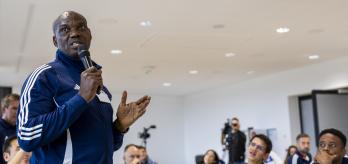
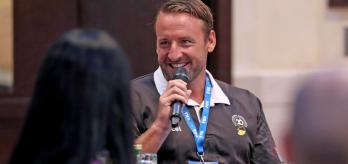
Technical leaders must help internal and external stakeholders feel ownership of a country’s technical plan in order for it to be a success, says Augustine Eguavoen, Technical Director of the Nigeria Football Federation.
“A technical leader must act as both a strategist and also a bridge-builder,” explains Eguavoen, who was appointed Nigeria’s technical director in 2020. “A key part of the job is to ensure all stakeholders feel ownership of the football development agenda. Through stakeholder engagement a technical plan can be transformed into a national movement.”
Engaging internal and external stakeholders in the creation and implementation of a national technical plan is key to the overall success of football in a country, believes Eguavoen, who has a long history as both national player and coach for Nigeria.
Without internal alignment, even the strongest technical strategy will struggle in implementation.
“Football development does not happen in isolation,” he explained. “A technical director operates within an ecosystem that includes federation leadership, coaches, players, referees, academies and government institutions. There are also sponsors, media, schools, and international bodies such as FIFA and CAF.”
Eguavoen, who recently graduated from the FIFA Technical Leadership Diploma, stresses the importance of internal alignment across all departments as a necessity for the successful implementation of a technical project. “Internally, alignment ensures that the technical vision is understood and supported across all departments – competitions, grassroots, refereeing, marketing and administration for example” he says. “Without internal alignment, even the strongest technical strategy will struggle in implementation.”
How effective communication can create alignment
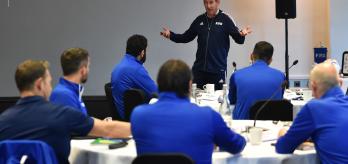
Establishing a regular cycle of review meetings and workshops for key departments has helped create alignment across the Nigeria Football Federation, says Eguavoen. “Communication and collaborative planning has been a priority,” he explains. “We have now established regular technical review meetings with national team coaches across age categories.
“Alignment sessions have been held between grassroots, youth development and elite performance departments to ensure a unified playing philosophy. Finally, we have worked closely with the federation’s leadership to ensure technical strategies align with governance and financial realities.”
Collaboration with external stakeholders
Engaging with external stakeholders can also help technical leaders build credibility and trust which, in turn, lead to long-term partnerships.
“Sustainable football development requires collaboration with clubs, state associations, educational institutions and private-sector partners,” says Eguavoen. “By maintaining open communication channels and focusing on shared objectives rather than isolated agendas, we have fostered a culture of co-operation and shared accountability.”

Eguavoen adds that relationships with state football associations have been strengthened to ensure the nationwide implementation of development programmes. Furthermore, club academies have been engaged to promote standardised coach education and talent identification frameworks.
Engaging internal and external stakeholders: best practice advice for other technical leaders
-
Start with a clear vision: clearly communicate your technical philosophy and long-term vision
-
Map who your stakeholders are: identify who influences, who implements and who is impacted by your strategy.
-
Use active listening: engagement should be built on listening as well as talking
-
Be consistent and build trust: it is important to do what you said you would do and also to remain transparent
-
Shared ownership: involve stakeholders in the planning, creation and implementation process
-
Regular communication: use structured updates, workshops, and forums to maintain alignment.
Rate your experience