Learning platform
 en
en 


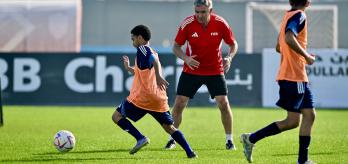
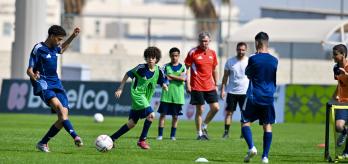
The series of “game phases training” integrates the holding midfielder’s role into a larger scale that is closer to a competitive 11-a-side match. The players are exposed to the full complexity of the game as it features more opponents, more teammates, more transitions, more unpredictability and a greater range of real-game possibilities, which help to develop game understanding.
The method ensures that the coach must adopt a stronger focus on individual objectives and provide targeted feedback, which helps players to perform the role better without disrupting the flow of the game practices. The repetition of specific scenarios is lower, although realism is highest. The inclusion of a three-line structure in build-up, and later, the introduction of wide options, give the “6” all the playing possibilities they’d face in a real game.
Learn in detail about the different phases of position-specific training and why it is so important.
Exercise overview
Key coaching points
When we look at the key coaching points, we also have to keep the PMDS model (Position, Moment, Direction, and Speed) in mind to ensure we achieve the best training-effect benefits.
-
Midfielders must offer constant support and stay involved in the build-up, ball progression and attack.
-
Work closely with fellow midfielders to recognise when to push forward to create space, or drop in to receive when space has been created.
-
Recognise when to create overloads and use numerical superiority in the centre of the pitch to play through pressure and progress the ball into attack.
-
When the ball is played into wide areas, midfielders must use the stretched pitch to switch play diagonally or play through balls into advancing attackers.
-
Be decisive when opportunities arise. Midfielders should limit touches, play forward as quickly as possible, and be brave enough to shoot when the opportunity presents itself.
Part 1: Create overloads to start dynamic attacks

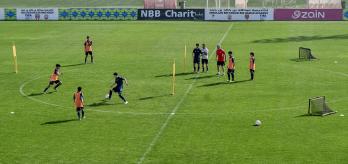
The session progresses with a game that incorporates a typical three-line structure to resemble a real-game scenario in build-up. The midfielders can then focus on typical actions such as creating overloads, drawing in opponents, breaking lines and switching play when receiving before progressing the ball.
-
Mark out a 50x30m pitch.
-
Place a full-size goal at each end of the pitch.
-
Position a goalkeeper in each goal.
-
Mark 2 lines across the pitch, each 15m from the goal line.
-
Split the players into 2 teams of 6, plus 2 neutral players.
-
Position the 2 neutral players in the central area to create overloads.
-
The action starts with a goalkeeper.
-
Out of possession, both teams are organised in a 2-2-2 formation. In possession, the 2 neutral players join the team on the ball in central areas to create an overload.
-
The team in possession must look to break the lines and try to score.
-
The 2 neutral players only play with the team in possession.
-
Offside rules apply.
Coaching points
Part 2: Stretch the defence to open passing lanes
The second drill creates a new game context with greater attacking superiority and complex game situations with the introduction of natural width to the structure. The addition of wide players gives midfielders the ability to stretch the defence, open central areas and recognise more opportunities to progress play with switches of play or penetrative actions in spaces left between defenders.
-
Mark out a 50x40m pitch.
-
Position a full-size goal at each end of the pitch.
-
Position a goalkeeper in each goal.
-
Mark out 2 lines across the pitch, 15m from each goal.
-
Split the group into 2 teams of 6, plus 4 neutral players.
-
Position 2 neutral players in the centre of the pitch and the other 2 neutral players wide on either side of the pitch.
-
Play starts with the goalkeeper.
-
The team in possession must progress the ball by creating and using overloads to build the attack and try to score.
-
All 4 neutral players play with the team in possession to create a 10v6 overload.
-
If the defending team wins the ball, the 4 neutral players switch to support them in building the attack.
-
If a goal is scored, play restarts with the goalkeeper of the team that conceded.
-
Offside rules apply.
Coaching points
Rate your experience