Learning platform
 en
en 


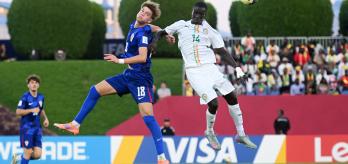
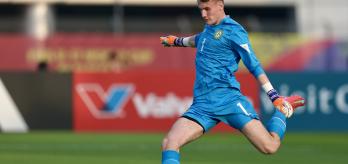
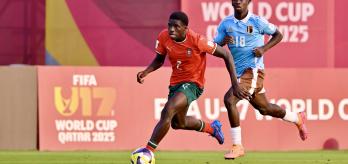
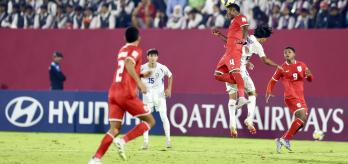
During FIFA U-17 World Cup Qatar 2025™, it was striking how much work the vast majority of the 48 teams competing had invested in long throw-ins. It was strongly evident that players had trained physically, technically, tactically and mentally for these scenarios.

Generating this distance shows these players have worked on their technique and body strength to be able to propel the ball so far. The teams have clear intentions regarding the starting positions of their players and the attacking movements being made as the ball travels in.
LONG THROW-INS DIRECT TO PENALTY AREA
In the final quarter of the pitch, 22% of all attacking throw-ins were thrown directly into the opposition’s penalty area, an increase of 15.2% from FIFA U-17 World Cup 2023™, with most teams competing at the tournament having players capable of delivering long throw-ins through pre-rehearsed routines. Interestingly, compared to 2023, the proportion of first contacts won by the attacking team fell to 40.7%, a decrease of 21.7%.
Despite the jump in volume, just 2% (4 out of 215) of throw-ins direct to the penalty area resulted in a goal; however, 21% led to an attempt at goal, presenting an area of development at youth level to refine both throwing technique and attacking strategies, while it can also demonstrate that defending teams were better prepared for these scenarios.
LONG THROW-IN STRATEGIES
Front-post flick-on
When throwing the ball directly into the penalty area, teams often seek a target player in the front-post zone to flick the ball further into the area where multiple players compete for the ball. These scenarios are chaotic and occur close to the goal, making them very difficult to defend. When a ball is thrown directly into the penalty area, it travels differently to a ball that is kicked in, often with a loftier, straighter trajectory, so even if the defending team makes the first contact, chaos is still caused, as it is very difficult for a defender to generate enough power and direction to clear this type of ball decisively the first time around.
As shown in clip 1 below, even if the defending team can clear the ball, if the attacking team has a strong rest-defence structure around the penalty area, there can be opportunities for other players to strike at goal unopposed.
Development trends: Far-post delivery reach
From a player development perspective, FIFA’s Technical Study Group were struck by the distance and power that these young players (aged 15-17) could generate. It was evident that players had been training for these types of deliveries from both a physical and technical perspective.
-
Run-up strides and planting of feet prior to ball release
-
W-grip on the ball for maximum leverage and accuracy
-
Core strength to push through the hips to generate power
In clip 2 below, we see a powerful example of this developmental strength in young players as Honduras score with the first contact at the back post from a long throw-in.
Key take-aways
The long throw-in direct to the penalty area is now a feature of the modern game, and in this tournament, it was evident that young players are already training for these scenarios physically, technically, tactically and mentally.
Physical development
-
Short accelerations and decelerations: Explosive, controlled run-ups
-
Core strength: Powerful thrust on ball release to generate maximum distance and power
Technical development
-
Awareness and practice of rhythmic strides and planting of feet
-
Positioning of hands on the ball in the W-grip to generate accuracy
Tactical development
-
Understanding of roles, responsibilities, starting positions and movements
-
Anticipation of competing for second balls and understanding the potential gains
-
Awareness of the difficulty for defending teams to clear
Mental development
-
Appetite to compete for second balls
-
Exposure to competing in chaotic situations develops fast decision-making skills
-
Developing speed of reaction times
Rate your experience


.variant64x64.jpg)




.variant348x164.jpg)