Learning platform
 en
en 


Effective coaches go beyond correcting single actions. They identify what keeps happening, understand why it happens, and intervene in ways that help players adapt their behaviour collectively. This process is not random; it is deliberate and intentional.
In the video example below, FIFA Technical Expert Jayne Ludlow works on defending in an 8v8 scenario. While the tactical theme is defensive organisation in a mid-to-low block, the deeper learning lies in how the coach intentionally creates scenarios, identifies a strong defensive pattern, and guides players toward a more effective collective solution.
Why identifying patterns matters
Players rarely make the same “mistake” by chance. More often, repeated outcomes reflect underlying habits, such as:
- habitual reference points (for example, defending opponents rather than space);
- partial understanding of individual or collective roles and responsibilities; and
- a lack of shared principles or communication within a unit.
When coaches intervene too early, they risk correcting symptoms rather than causes. The real coaching challenge is to identify what keeps happening and why – and then to reshape behaviour in a way players understand and can consistently reproduce.
This requires more than watching and reacting. It requires deliberately designing practices that reveal patterns, making those patterns visible to players, and reshaping behaviour through clear, shared understanding.

Session context: Planned scenarios in defensive play
In this session:
- the attacking team builds from the halfway line with two centre-backs, a midfield three, and three forwards;
- the defending team sets up with a goalkeeper, a back four, and three midfielders; and
- the defenders operate in a mid-to-low block, aiming to protect central areas and counter quickly after regaining possession into wide goals.
Importantly, the coach plans for three common attacking scenarios that this defensive unit must handle:
- attacks played through the defence;
- attacks played around the defence; and
- attacks played over the defence.
These are not random situations. They reflect the most frequent ways opponents attempt to break down a block.
The video example focuses on one of these scenarios: defending when the ball is played wide. The coach deliberately guides the practice to create this moment so she can observe how the defensive unit responds.
Breaking Down the Coaching Process
The strength of this example lies in the intentional process the coach follows:
create → observe → identify → reshape → check.
Step 1: Create the scenario and identify the pattern
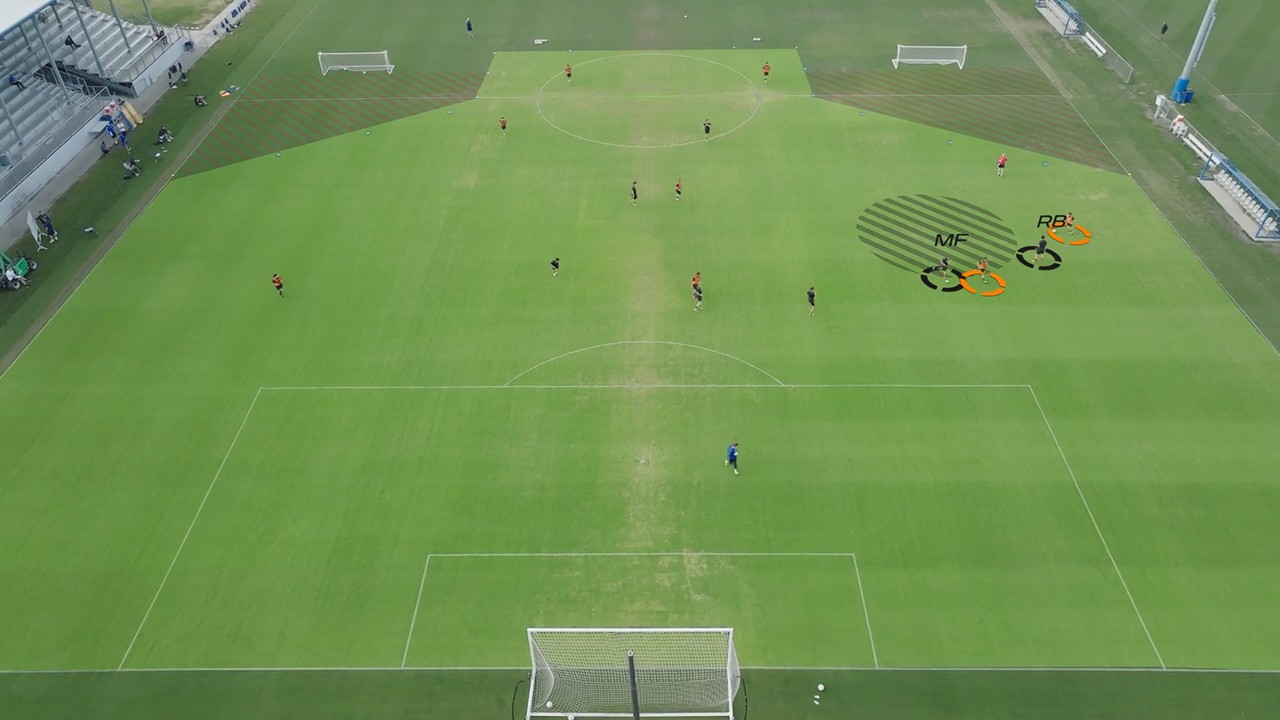
The coach asks the attacking team to play the first ball wide – and nothing more. There are no additional instructions for the attackers or the defenders. Play unfolds freely. As the ball is played to the winger:
- The full-back steps out to press.
- A nearby attacking midfielder makes a forward run.
- The defending midfielder tracks that run.
- Central space opens.
- The winger exploits this space by dribbling inside and switching play to the far side, creating a chance.
The coach does not intervene. This is intentional observation. By creating the scenario and allowing play to flow, she can identify a recurring defensive habit – a strong man‑oriented response – rather than reacting to a single mistake.
Step 2: Recreate to identify the pattern and offer an alternative
Rather than correcting immediately, the coach recreates the same situation:
- first pass wide;
- same attacking run; and
- same defensive structure.
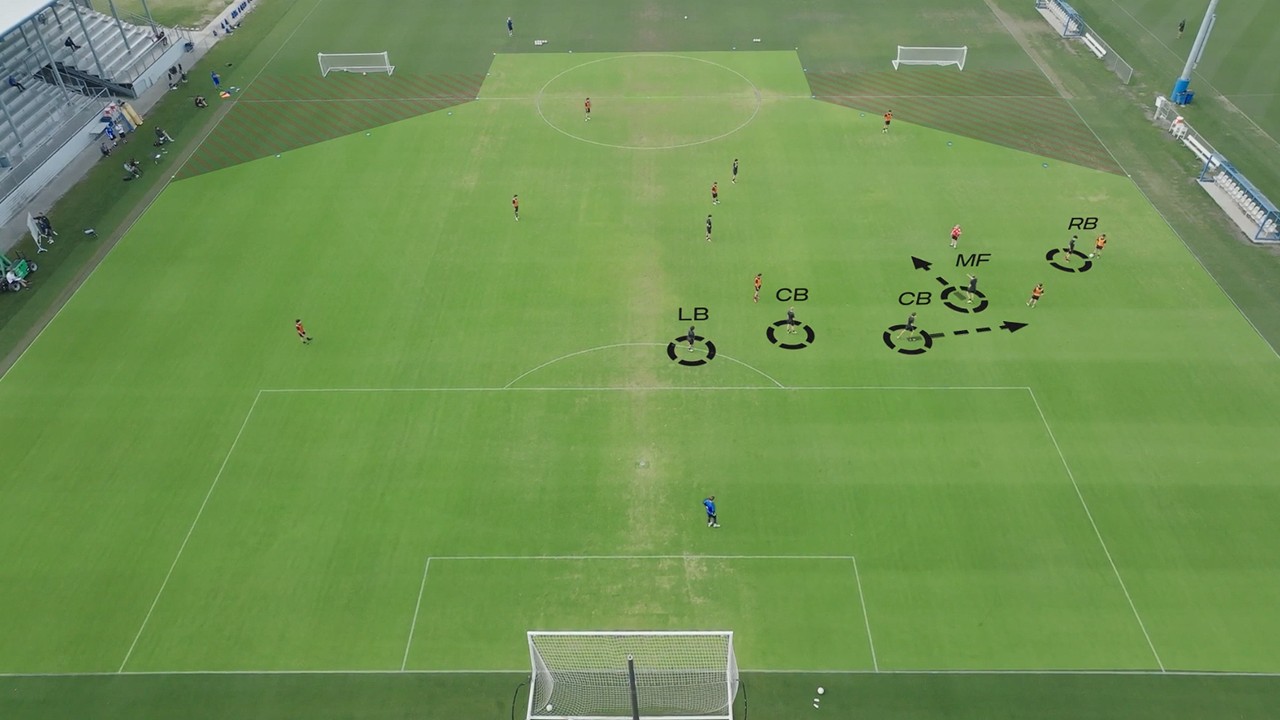
The behaviour repeats. Now the coach stops play at the key moment. By freezing the picture, she makes the pattern visible to everyone.
Only at this point does she intervene, highlighting a more effective, ball‑oriented solution:
- The near-side centre-back covers behind the full-back and takes responsibility for the runner.
- The holding midfielder remains central, supporting the full-back and protecting the space the winger previously attacked.
Step 3: Recreate to check understanding
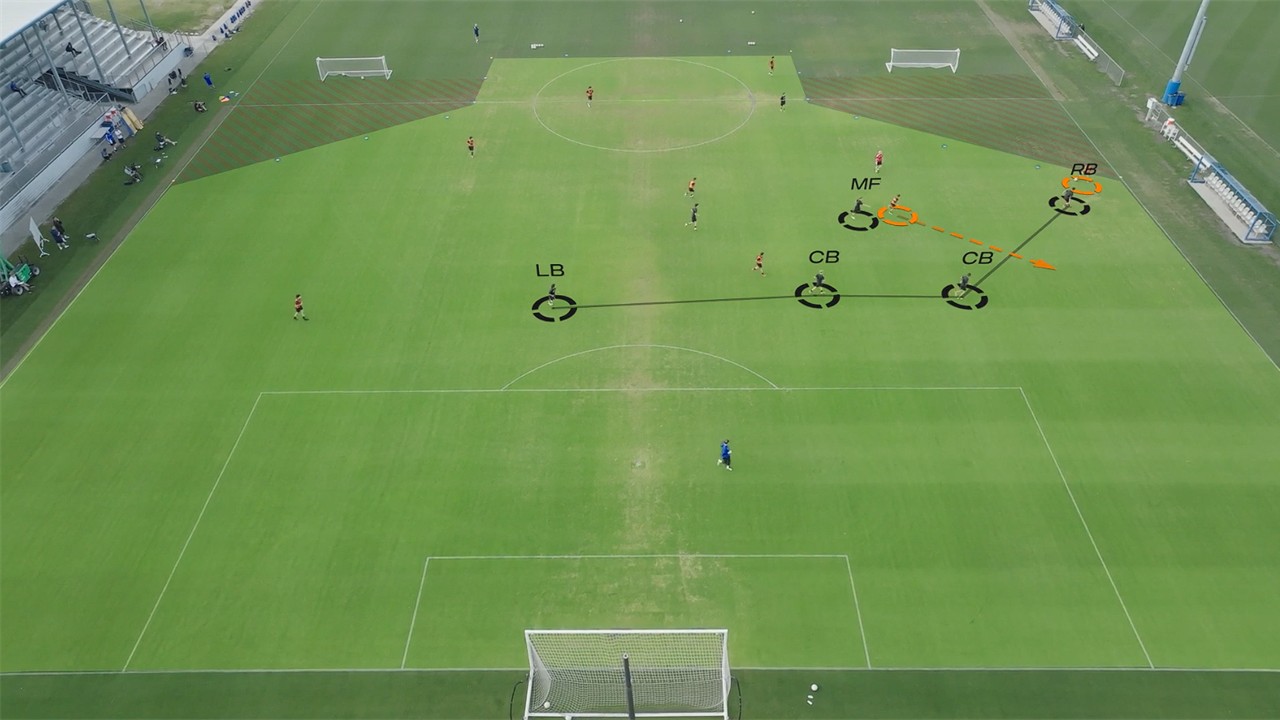
To consolidate the learning, the coach recreates the scenario one final time – again prescribing only the initial wide pass and attacking run.
This time:
- the centre-back picks up the runner;
- the holding midfielder stays central; and
- the winger dribbles inside but is supported against and stopped.
The coach does not add further instruction. The players demonstrate understanding through their collective behaviour.
This step is critical: it confirms that the players have understood the problem and can correctly execute the coached solution when the scenario is presented again.
Transfer within free play
Later in the same exercise, during free-flowing 8v8 play, the wide situation emerges naturally – without being prescribed.
The defenders:
- stay compact;
- communicate roles clearly; and
- protect central space effectively.
This shows the transfer of learning within free play, under the same constraints but without a guided setup. The new behaviour has become part of how the players now defend, rather than a response tied to a specific instruction.
Key take-aways
- Identifying patterns is an active coaching skill, not a passive one.
- Coaches can guide observation by deliberately creating representative scenarios.
- Recurring problems reveal gaps in knowledge and understanding that require targeted coaching interventions.
- Recreating situations helps players see and understand patterns for themselves.
- Behaviour change is confirmed when solutions appear in free play, not just rehearsed moments.
Rate your experience