Learning platform
 en
en 


In the third part of this series, we explore a practical example from Sydney FC U13 Head Coach Alex Watson, illustrating how the club’s game-based philosophy translates into concrete training design.
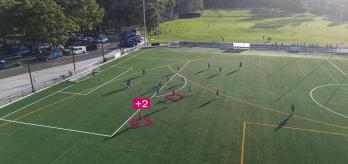
Academy sessions follow a simple structure: an activation phase followed by two 40-minute blocks of gameplay — a medium-team game and a large-team game. The example highlighted here is a large-team 9v9 game, designed to develop key “Team DNA” actions within a fully representative, competitive environment.
Rather than focusing purely on goals scored, the game uses a bonus-point scoring system to balance team success with individual development. Players and teams are rewarded for specific actions that reflect Sydney FC’s playing identity:
-
Give-and-go – 1 point
-
Come-around – 2 points
-
Shot on goal – 5 points
-
Goal – 10 points
The team with the highest total score wins. This means players are constantly encouraged to pursue both the outcome of the game and the quality of their individual contributions. A goal still matters most, but it is built on a series of behaviours that the club wants to see repeated: combination play, intelligent movement, and purposeful attacking actions.
What stands out in this practice is how naturally these incentives shape behaviour. The game remains fast, competitive and realistic, yet players actively search for opportunities to express the team DNA. Individual learning objectives are embedded directly into the game, without breaking its flow — demonstrating how development and performance can coexist within the same competitive framework.
Exercise breakdown
The following breakdown presents one representative example of how a game-based exercise is structured within Sydney FC’s methodology.

While structures remain flexible, the core learning principles are consistent:
-
Repeated rounds of competition shaped by bonus-point scoring.
-
Short reflective tasks during breaks.
-
Minimal coaching intervention during gameplay.
The screenshots below break down each phase, illustrating how this structure is applied on the pitch.
Setting position specific targets
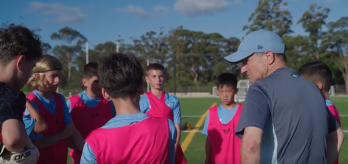
Individual development within Sydney FC’s game-based model is further reinforced through position-specific challenges. In the video example below, Head Coach Alex Watson layers positional targets into the same game format, ensuring players focus on behaviours most relevant to their role within the team structure.
The coach supports these targets by providing performance context. Midfielders, for example, are informed that many goals originate from passes played in behind defensive lines. Successful line-breaking passes are therefore rewarded with five individual points, aligning positional targets with match-relevant outcomes.
Match transfer
The effectiveness of Sydney FC’s game-based methodology is most evident on match day. The following clips showcase how “Team DNA” actions developed in training emerge in competitive play across the academy.
Key take-aways
-
Representative games create realistic learning environments.
-
Individual challenges can be embedded within team practice and tailored by position through position-specific targets.
-
Scoring systems incentivise key behaviours aligned to the club's game model.
-
Minimal coaching intervention during gameplay maximises learning.
-
Player-led reflection reinforces ownership and understanding.
-
Game-based design enables learning to transfer into match performance.
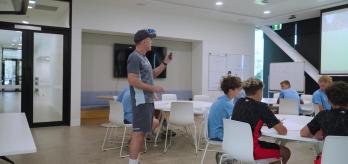
Learning at Sydney FC also extends beyond the pitch. In part 4 of this series, we enter the classroom, where players reflect on selected match clips in a team meeting, alongside an individual player review that connects learning back to the club's “Team DNA” principles.
Rate your experience