Learning platform
 en
en 


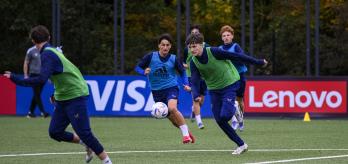
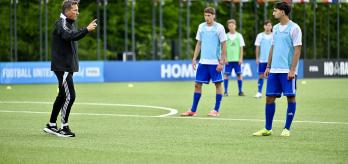
In this two-part series, we join Gilberto Silva on the training ground to explore how these qualities can be developed by playing the game. Rather than relying on complex or isolated drills, the session is built around deliberately designed possession practices and game formats that reflect key characteristics of contemporary football: high speed of play, intense pressing, frequent transitions and the constant requirement for players to remain composed while operating under pressure.

Overload v. Equal Number Practices
This first article focuses on the two possession-based practices used in the opening part of the session. Both practices share the same objective — keeping possession — but they place players in very different contexts. By contrasting a 4v4 plus 2 overload with a 5v5 practice in equal numbers, Gilberto Silva demonstrates how subtle changes in practice design can provoke different behaviours, decisions and competencies.
Importantly, these contrasting scenarios are not presented as alternatives where one is better than the other. Instead, both are deliberately used to expose players to challenges they regularly encounter in the modern game:
-
finding the free player in overload situations
-
breaking the press when marked player-to-player
Exercise 1: 4v4 plus 2 – Overload Practice
In the first possession practice, two neutral players create a constant numerical advantage for the team in possession. This overload provides players with more time and more passing options — but it does not remove the demand for quality.
With a free player often available, the practice places a strong emphasis on:
-
Intelligent positioning to create clear passing lanes
-
Awareness before receiving the ball
-
A positive first touch that allows play to flow
-
Efficient ball circulation to find the free player
Out of possession, teams are challenged to remain compact, screen passing options and shift collectively, rather than pressing individually.
This practice relates to game moments where the attacking team has a local numerical superiority — for example, when building out from the back against an opponent that defends with fewer players in the first line.
The set-up requires good positioning, clear passing options and the ability to recognise and find the free player.
Exercise 2: 5v5 – Direct Pressure Practice
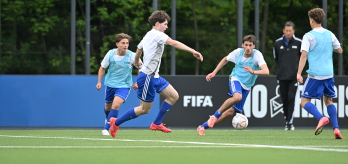
The second possession practice introduces a clear contrast. With equal numbers on the pitch, time and space are reduced, and pressure becomes constant.
In this environment, keeping possession requires different competencies:
-
Well-timed movements to escape direct marking
-
Receiving and protecting the ball under pressure
-
Short dribbles to evade immediate pressure
-
Accepting turnovers as a natural part of the game
Out of possession, the practice naturally encourages player-to-player marking, aggressive pressing and immediate counter-pressing. Transitions occur frequently and often unpredictably.
These characteristics mirror a clear trend in the modern game, where teams increasingly press player-to-player across the pitch rather than relying on an extra defender in the last line.
Players learn to cope with constant pressure, make quick decisions and take responsibility in direct duels — competencies that are essential in player-to-player pressing environments.
A foundation for the games to follow
Although both practices focus on possession, they develop different player competencies. The overload scenario supports players in improving positioning, scanning and composure on the ball, while the equal-number practice places greater demands on close control, resilience and problem-solving under immediate pressure.
Together, these practices prepare players for the game scenarios that follow later in the session. The ability to recognise free players and stay calm under controlled pressure, combined with the capacity to cope with intensity and resist the press in direct duels, underpins effective play out from the back — the key theme explored further in the second part of the session.
Take-aways for coaches
-
Well-designed possession practices can develop specific competencies that directly relate to key trends in the modern game
-
Overload scenarios promote positioning, awareness and composure, supporting players in finding free teammates and playing through pressure
-
Equal-number practices increase demands on ball control, resilience and decision-making under direct pressure, mirroring player-to-player pressing situations
-
Using contrasting practice designs within one coherent session helps players understand that effective possession depends on context, not a single solution
By deliberately adjusting numbers, space and rules, coaches can align training more closely with the demands players face on match day and develop more competent and adaptable performers.
Rate your experience