Learning platform
 en
en 


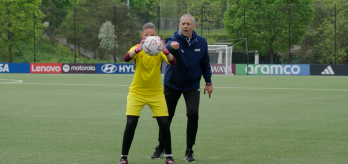
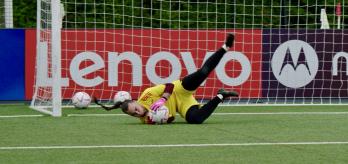
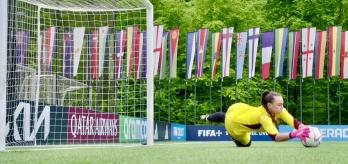
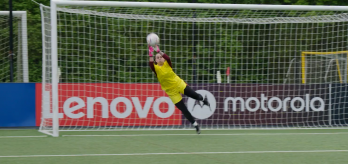
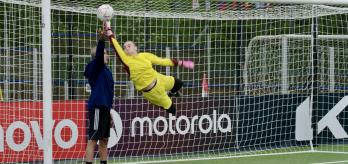
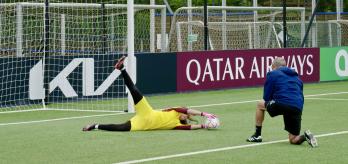
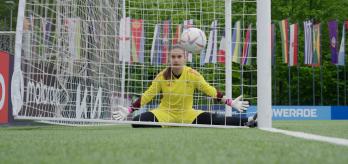
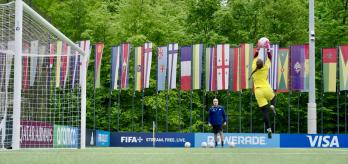
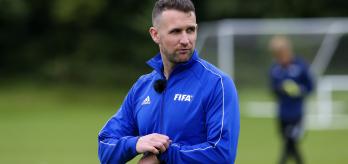
In this session, FIFA Goalkeeping Coach Thierry Barnerat delivers a series of exercises to help a young group of goalkeepers understand and implement the X-block effectively when in 1-on-1 situations. It requires key fundamentals such as;
-
recognising when the X-block is needed based on the distance to the ball and opponent — typically within 7 metres;
-
making the body as large as possible to cover all angles of the goal;
-
stretching the legs with the front leg closing larger spaces and the back leg covering small spaces;
-
spreading the arms up and out so that the ball cannot be lifted over;
-
adopting and maintaining a core body when approaching the ball or opponent; and
-
dealing with the fear of being struck by the ball by embracing the impact and keeping the eyes open.
Introduction
Exercise 1: Coordinating the X-block

This first exercise primarily focuses on the coordinated movements required to complete a successful X-block. By keeping things simple, the goalkeeper can focus on coordinated arm and leg stretch movements. The variation in the throws helps players avoid programmed, automated actions and focus on adapting their bodies whilst maintaining a solid core.
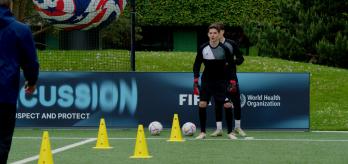
Exercise 2: Spreading both legs
This practice focuses on the technique of spreading both legs out simultaneously. To stretch effectively, the goalkeeper must use the front leg to cover larger spaces and use their back leg to cover the smaller spaces. The first part uses different coloured cones to help goalkeepers with their coordination before a ball is introduced that they must block.
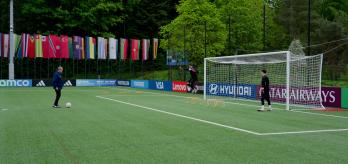
Exercise 3: Using the X-block to defend cut-backs
A cut-back situation is used to put the fundamentals of the X-block into practice in this exercise. Facing a cut-back, the goalkeeper must adjust to the ball moving across the goal and sprint out to the ball using the X-block to defend the space. A dead ball is used so the goalkeeper can focus on working the whole of the body.
Exercise 4: Facing the ball
This final drill deals with the fear of the ball and being able to keep eyes on the ball when performing the X-block. This allows the goalkeeper to get into the habit of embracing the ball’s impact and maintaining the correct posture in moments when the natural reaction is to turn or flinch.
Rate your experience